

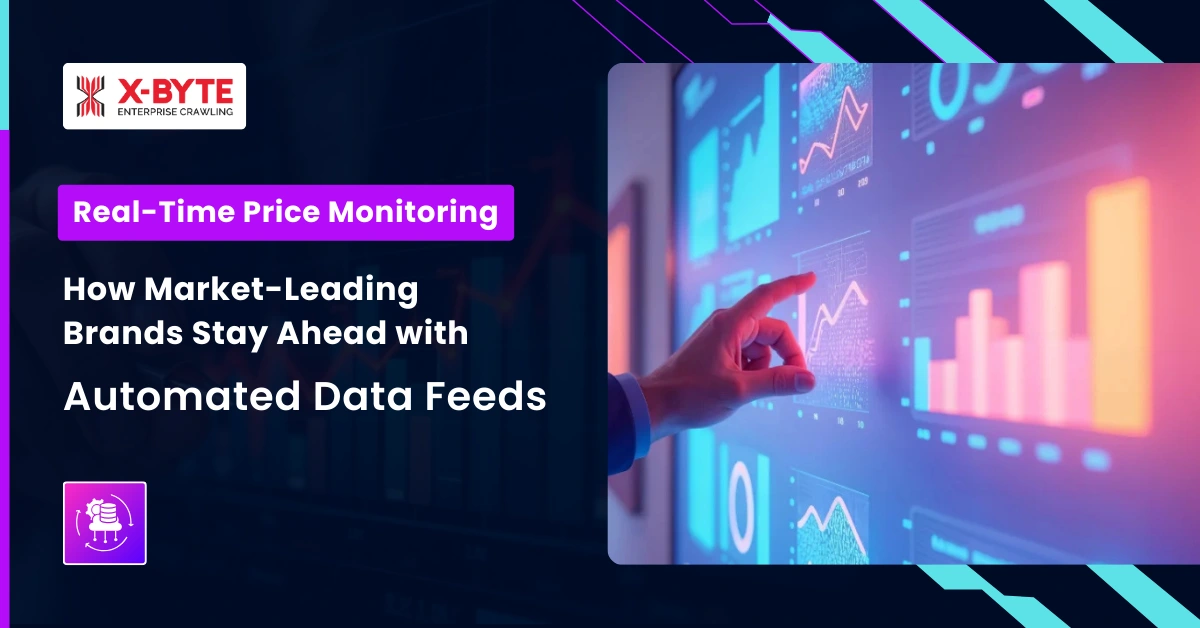
In today’s hyper-competitive retail landscape, pricing decisions can make or break your market position. Real-time price monitoring has become essential for brands that want to protect margins, respond to competitor moves instantly, and maintain competitive advantage. This comprehensive guide explains how automated pricing data feeds work and why leading brands rely on them to stay ahead.
Why Do Real-Time Pricing Feeds Matter for Modern Retailers?
Price volatility directly impacts your bottom line. However, many retailers still struggle with outdated pricing strategies that leave money on the table.
Market-leading brands understand a critical truth: manual price tracking cannot keep pace with today’s dynamic markets. When competitors adjust prices multiple times per day, delayed responses cost revenue. Research shows that brands using automated price monitoring achieve 12-18% higher margins compared to those relying on manual competitor research.
The impact on business performance is measurable:
- Revenue optimization: Brands capture demand peaks by adjusting prices before competitors react
- Margin protection: Automated alerts prevent underpricing scenarios that erode profitability
- Competitive visibility: Real-time insights reveal market positioning across thousands of SKUs simultaneously
High-growth retailers at X-Byte Enterprise Crawling track competitor pricing continuously because market conditions change hourly. Therefore, static pricing strategies no longer deliver results. Consequently, automated feeds have shifted from competitive advantage to business necessity.
Consider this: When a major competitor drops prices on key products, how quickly does your team respond? Manual tracking means delays of hours or days. Meanwhile, brands with automated systems react within minutes, protecting market share before customers switch.
What Is Real-Time Price Monitoring?
Real-time price monitoring is an automated system that continuously tracks competitor prices across multiple channels and delivers structured data feeds to your pricing teams. Unlike manual research, these systems extract, normalize, and deliver pricing intelligence at scale.
Here’s how it works in practice:
Multi-channel retailers tracking 10,000+ SKUs receive hourly price updates from competitor websites, marketplaces, and retail channels. The system captures price changes, promotional offers, stock availability, and product attributes automatically. This data flows directly into dashboards, APIs, or business intelligence platforms where pricing managers make decisions.
For example, a consumer electronics brand using X-Byte Enterprise Crawling’s automated feeds monitors 50 competitors across 15,000 products. The system refreshes data every four hours, flagging significant price movements instantly. This allows the pricing team to respond strategically rather than reactively.
Feed frequency determines competitive responsiveness:
- Hourly updates: Ideal for fast-moving categories like electronics and fashion
- Twice-daily refreshes: Suitable for consumer packaged goods with moderate volatility
- Daily feeds: Appropriate for categories with stable pricing patterns
The value proposition is clear. Automated feeds eliminate manual data collection, reduce human error, and provide comprehensive market visibility that manual processes cannot achieve.
How Do Automated Price Feeds Work? (Step-by-Step)
Understanding the technical process helps brands evaluate potential partners and optimize their pricing intelligence strategy.
Data Extraction from Competitor Sites
The process begins with systematic data extraction from target websites. Advanced crawling technology accesses competitor product pages, capturing current prices, promotional messaging, and availability status. X-Byte Enterprise Crawling uses enterprise data extraction services that handle JavaScript-heavy sites, anti-bot protections, and dynamic pricing displays.
Modern extraction systems adapt to website changes automatically. When competitors redesign their sites, machine learning models identify new price locations and adjust extraction rules without manual intervention. This ensures continuous data flow regardless of technical changes.
Normalization & Price Structuring
Raw extracted data requires standardization before analysis. The normalization process matches products across different retailers, standardizes currency formats, and structures promotional information consistently.
For instance, one retailer lists “50% off” while another shows “$49.99 (was $99.99).” Normalization converts both formats into structured data: original price, current price, discount percentage, and promotional terms. This allows direct comparisons across all competitors simultaneously.
Product matching algorithms ensure accuracy. The system compares SKUs, product titles, specifications, and brand names to confirm exact product matches. This prevents false comparisons that would mislead pricing decisions.
Feed Delivery via API / Dashboard / Flat File
Once processed, pricing data reaches your team through multiple delivery methods:
API integration connects directly to your existing pricing engines, ERP systems, or business intelligence platforms. Real-time APIs push updates as price changes occur, enabling immediate response capabilities.
Dashboard access provides visual interfaces where pricing managers analyze trends, set alerts, and export reports. Customizable views filter data by category, competitor, or price change threshold.
Flat file delivery sends CSV or JSON files to your data warehouse on scheduled intervals. This method suits brands integrating pricing intelligence into existing data pipelines.
X-Byte Enterprise Crawling delivers feeds through all three methods, allowing brands to choose the approach that fits their technical infrastructure and workflow requirements.
What Key Pricing Intelligence Metrics Should Every Brand Track?
Effective price monitoring extends beyond simple competitor price comparisons. Leading brands track specific metrics that reveal market dynamics and competitive strategy.
How Often Do Competitor Prices Change?
Price change frequency indicates market volatility and competitive intensity. Categories with high change frequency require more aggressive monitoring and faster response times. Track daily, weekly, and monthly change patterns to understand optimal adjustment timing.
How Can You Monitor Promotions & Discount Tracking?
Promotional activity directly impacts demand and market share. Automated systems capture discount depth, promotion duration, and promotional messaging. This reveals competitor promotional calendars, allowing brands to anticipate market moves and plan counter-strategies.
For example, if a competitor consistently runs promotions on the 15th of each month, your brand can prepare competitive offers or alternative value propositions in advance.
Why Are Stock-Out Alerts Critical?
Out-of-stock situations create immediate revenue opportunities. When competitors face inventory shortages, demand shifts to available alternatives. Real-time stock-out alerts enable brands to capture this demand through strategic pricing or increased marketing spend.
What Is Price Parity Across Channels?
Omnichannel retailers must maintain consistent pricing across online stores, marketplaces, and retail partners. Price parity tracking identifies discrepancies that confuse customers or violate minimum advertised price (MAP) agreements. Automated monitoring ensures brand consistency across all customer touchpoints.
How Do Top Brands Use Real-Time Price Monitoring?
Real-world applications demonstrate the strategic value of automated pricing intelligence across different business models.
How Do DTC Brands Adjust Prices Before Competitors React?
Direct-to-consumer brands leverage price monitoring to identify market opportunities before competitors respond. By analyzing competitor price movements and demand signals, DTC brands adjust their pricing proactively rather than reactively.
For instance, when raw material costs increase industry-wide, brands with real-time intelligence see competitor price increases immediately. This allows them to adjust prices in sync with the market, maintaining margins without losing competitive position.
How Do Marketplaces Manage MAP Compliance?
Brand manufacturers selling through third-party marketplaces face constant MAP violations. Unauthorized sellers frequently undercut minimum advertised prices, damaging brand equity and channel relationships.
Automated price monitoring identifies MAP violations across hundreds of sellers in real-time. X-Byte Enterprise Crawling’s pricing intelligence solutions track authorized and unauthorized sellers simultaneously, flagging violations for immediate enforcement action.
How Do Omnichannel Retailers Sync Online & Offline Prices?
Retailers operating both physical stores and ecommerce channels need unified pricing strategies. Automated feeds ensure that online prices reflect current market conditions while maintaining parity with in-store pricing where required.
Geographic pricing strategies also benefit from automated monitoring. Retailers adjust regional pricing based on local competitor activity, optimizing for each market’s unique competitive dynamics.
Why Do Automated Price Feeds Beat Manual Tracking?
The advantages of automation over manual processes are substantial and measurable.
Zero delays: Automated systems operate continuously, capturing price changes within minutes of occurrence. Manual tracking introduces delays of hours or days, during which competitors capture market share and revenue.
Higher accuracy: Human data entry errors are eliminated. Automated extraction and validation ensure pricing data reliability, which is critical for confident decision-making.
Competitive advantage: Brands respond to market changes before competitors even detect them. This speed creates compounding advantages over time as optimal pricing decisions accumulate.
Better forecasting for pricing teams: Historical pricing data reveals patterns that inform future strategy. Automated systems build comprehensive databases showing seasonal trends, competitive reactions, and price elasticity indicators.
Consider the operational efficiency: A pricing team manually tracking 50 competitors across 1,000 products invests hundreds of hours monthly on data collection alone. Automation redirects this effort toward strategic analysis and decision-making instead.
Case Example: How Did a Leading Retailer Improve Margins by 18%?
A major consumer electronics retailer faced margin pressure from aggressive online competitors. Manual price monitoring covered only 20% of their catalog, leaving most products priced based on outdated assumptions.
The challenge was multifaceted:
- Competitors adjusted prices multiple times daily
- Manual tracking covered insufficient product breadth
- Pricing decisions relied on week-old data
- Regional price variations went undetected
The retailer implemented automated price feeds from X-Byte Enterprise Crawling, tracking 75 competitors across 12,000 SKUs with twice-daily updates. The solution included API integration with their existing pricing engine and customized dashboards for category managers.
Results emerged within 90 days:
- Average margin improvement: 18% across monitored categories
- Revenue increase: 7% from optimized pricing during demand peaks
- Pricing decision speed: Response time reduced from 48 hours to 2 hours
- Category coverage: 100% of catalog monitored continuously
The retailer identified that competitors frequently raised prices during stock shortages. By detecting these patterns early, they captured additional margin during high-demand periods while maintaining competitive pricing during normal conditions. For more detailed retail pricing insights case study, visit X-Byte Enterprise Crawling’s blog.
How Can You Integrate Price Intelligence into Your BI & ERP Systems?
Modern pricing operations require seamless integration between data sources and decision-making platforms.
API integration provides real-time data flows into pricing engines, ERP systems like SAP or Oracle, and business intelligence platforms such as Tableau, Power BI, or Looker. REST APIs deliver JSON-formatted data that pricing applications consume directly, eliminating manual data handling.
CSV/JSON delivery suits organizations with existing ETL processes. Scheduled file delivery integrates pricing data into data warehouses alongside sales, inventory, and customer data. This consolidated view enables advanced analytics combining pricing intelligence with operational metrics.
Real-time dashboards for C-suite teams deliver executive visibility into competitive positioning. Customizable visualizations show market share trends, margin performance by category, and competitive price positioning. X-Byte Enterprise Crawling provides white-label dashboard solutions that reflect your brand identity while delivering critical insights.
Integration success depends on data quality and format compatibility. Therefore, evaluate potential partners based on their ability to deliver structured, validated data that matches your technical requirements without extensive custom development.
How Do You Choose the Right Price Monitoring Partner?
Selecting a pricing intelligence provider requires evaluation across multiple dimensions that impact long-term success.
Data accuracy determines decision quality. Ask potential partners about their validation processes, error rates, and quality assurance methodologies. Request sample data to verify extraction accuracy and product matching reliability.
API speed affects competitive responsiveness. Evaluate latency between price changes occurring and data availability in your systems. Sub-hour latency is essential for fast-moving categories where minutes matter.
Scalability ensures future growth. Your monitoring needs expand as your business grows. Verify that providers can scale from hundreds to hundreds of thousands of SKUs without performance degradation or cost penalties.
SLA quality & support determine operational reliability. Uptime commitments, response time guarantees, and dedicated support teams prevent operational disruptions. Review service level agreements carefully before committing to long-term contracts.
X-Byte Enterprise Crawling delivers enterprise-grade reliability with 99.9% uptime guarantees, sub-15-minute data refresh capabilities, and dedicated account management. Our infrastructure scales seamlessly from startup monitoring requirements to enterprise deployments tracking millions of products across global markets.
Why Are Real-Time Pricing Feeds Now Essential?
Market dynamics have fundamentally changed, making automated price monitoring essential for competitive survival.
Price transparency means customers compare prices instantly across dozens of retailers. Brands that fail to match market rates lose sales immediately. Conversely, those monitoring competitor pricing continuously capture demand by positioning themselves competitively.
Faster decisions win in modern markets. The time between detecting competitive moves and responding determines market share outcomes. Automated feeds compress this timeline from days to minutes, creating decisive advantages.
Competitive dominance belongs to data-driven organizations. Brands using pricing intelligence make thousands of optimized decisions monthly while competitors rely on intuition and outdated information. This systematic advantage compounds over time into significant market share and margin improvements.
The future of automated pricing extends beyond monitoring into predictive analytics and autonomous pricing adjustments. Machine learning models analyze historical patterns, demand signals, and competitive behavior to recommend or automatically implement optimal prices. X-Byte Enterprise Crawling is developing these capabilities to help brands stay ahead of emerging market dynamics.
Organizations still relying on manual price tracking face growing disadvantages. Meanwhile, forward-thinking brands investing in automated pricing intelligence build sustainable competitive advantages that are difficult for competitors to overcome.
Frequently Asked Questions
 ✯ Alpesh Khunt ✯

Related Blogs
The Role of Data Annotation in Large Language Model Training and Performance
How Web Scraping Is Used to Extract eCommerce Data From eBay