

Why Do Most Enterprise Scraping Projects Stall After the Pilot Phase?
Most companies start with enthusiasm. A single team builds a proof-of-concept web scraper that delivers promising results. However, when they try to scale that PoC across multiple business units, everything falls apart.
The pilot works because one developer owns it. They understand the code. They fix issues quickly. They know which websites to scrape and when to scrape them.
Production is different. Multiple teams need data. Websites change their structure. IP addresses get blocked. Legal teams raise compliance concerns. Infrastructure costs spiral out of control.
According to industry research, over 60% of enterprise web scraping projects never move beyond the pilot stage. The gap between a working prototype and a production-grade data pipeline is wider than most organizations anticipate.
What Actually Changes When Web Scraping Goes Enterprise-Wide?
From Scripts to Systems
A proof-of-concept scraper is essentially a script. It runs on a developer’s laptop or a single server. It extracts data from a few websites. If it breaks, one person fixes it.
Enterprise web scraping requires a completely different approach. You need production data pipelines that serve multiple business units simultaneously. Each department has different data requirements, update frequencies, and quality standards.
For example, your pricing team might need competitor price data refreshed every six hours. Meanwhile, your market research team needs quarterly reports from industry websites. Your sales team wants real-time updates on prospect company news.
Service Level Agreements Matter
Once business units depend on scraped data for decision-making, you need guaranteed uptime. Teams expect 99.9% availability. They need data delivered on schedule. They require accuracy guarantees.
This shifts web scraping from a technical experiment to a critical business service. You must implement monitoring, alerting, and incident response procedures. Downtime directly impacts revenue and operational efficiency.
Governance Becomes Non-Negotiable
Legal and compliance teams get involved at scale. They want to know which websites you’re scraping. They need proof that you’re respecting robots.txt files and terms of service. They require audit trails showing who accessed what data and when.
Regional regulations like GDPR add another layer of complexity. Different business units operate in different jurisdictions. Your scraping infrastructure must accommodate varying compliance requirements.
What Are the Core Challenges in Scaling Web Scraping Across Business Units?
Fragmented Tools Create Operational Chaos
Without centralized oversight, each business unit builds its own scraping tools. Marketing uses one vendor. Sales uses another. Product teams write custom scripts.
This fragmentation leads to duplicated efforts. Multiple teams scrape the same websites independently. They encounter the same problems separately. They negotiate separate proxy contracts and pay premium prices for identical services.
Moreover, fragmented tools make it impossible to enforce standards. Each team handles data quality differently. Some teams store raw HTML. Others extract structured data. Nobody maintains consistent schemas.
IP Blocks and Anti-Bot Measures
Websites don’t want to be scraped at scale. They implement sophisticated anti-bot measures. They track request patterns. They fingerprint browsers. They block entire IP ranges.
When you scale from one team to ten teams, your request volume increases dramatically. Websites notice. They block your infrastructure. Your scrapers fail silently, and business units receive incomplete data without realizing it.
Professional proxy rotation and anti-bot handling become essential. However, these technologies require specialized expertise that most internal teams lack.
Data Drift Goes Undetected
Websites change their structure constantly. A CSS selector that worked yesterday breaks today. The data you think you’re collecting is actually incomplete or incorrect.
At small scale, a developer notices and fixes the problem quickly. At enterprise scale, broken scrapers can run undetected for weeks. Business units make decisions based on stale or inaccurate data.
You need automated data validation. You need schema enforcement. You need alerting when data quality degrades. Building this infrastructure internally requires significant investment.
Infrastructure Costs Become Unpredictable
Running scrapers at scale consumes substantial computing resources. You need servers, storage, bandwidth, and proxy services. Costs vary based on website complexity and update frequency.
Without proper architecture, infrastructure expenses grow faster than the value delivered. Teams provision servers independently. They purchase redundant proxy subscriptions. Nobody tracks total cost of ownership.
What Does Enterprise-Grade Web Scraping Architecture Actually Look Like?
Centralized Orchestration Platform
Production web scraping requires a centralized orchestration layer. This platform manages all scraping jobs across business units. It schedules extractions, handles retries, and monitors performance.
Centralized orchestration provides visibility. Data teams see which scrapers are running, which are failing, and which consume the most resources. They can optimize based on actual usage patterns.
At xbyte.io, we’ve built our infrastructure around this principle. Our platform orchestrates thousands of scrapers simultaneously while maintaining guaranteed uptime for each business unit.
Modular, Reusable Crawlers
Instead of building custom scrapers for each use case, create modular components. Design crawlers that multiple teams can configure for their specific needs.
For instance, build a generic e-commerce scraper that works across Amazon, Walmart, and Target. Business units simply configure which products to track and how frequently to check prices.
This approach reduces development time dramatically. It also improves reliability because each component receives more testing and refinement.
Professional Proxy Management
Enterprise scraping demands sophisticated proxy infrastructure. You need residential proxies, datacenter proxies, and mobile proxies. You need intelligent rotation that avoids detection patterns.
Building this internally is expensive. Proxy vendors charge premium prices for quality services. Managing proxy health, rotating credentials, and handling geo-targeting requires dedicated engineering resources.
Managed web scraping services like X-Byte Enterprise Crawling provide this infrastructure as part of the platform. We maintain relationships with top proxy providers. We handle rotation, geo-targeting, and failure recovery automatically.
Automated Data Validation
Every scraped dataset needs validation before delivery. Check for schema compliance. Verify data freshness. Compare against historical patterns to detect anomalies.
Automated validation catches problems early. If a scraper extracts incomplete data, the system flags it immediately. Business units never receive corrupted datasets.
This requires building validation rules for each data type. Product prices should fall within expected ranges. Company information should include required fields. News articles need publication dates.
Should You Centralize or Federate Your Scraping Operations?
The Case for Centralized Ownership
Centralized scraping teams work best for most enterprises. One specialized team builds and maintains all scraping infrastructure. They enforce standards, manage vendors, and ensure compliance.
Centralization eliminates duplication. It enables knowledge sharing. It allows the organization to negotiate better vendor contracts and achieve economies of scale.
However, centralized teams can become bottlenecks. Business units complain about slow response times. They feel disconnected from technical decisions that affect their operations.
Enabling Business Units Through Governed Access
The solution is centralized infrastructure with federated access. The central team provides a self-service platform. Business units configure their own scraping jobs within established guardrails.
For example, the central team maintains approved scrapers for common websites. Business units select which data fields they need and how often to refresh them. The platform handles execution, monitoring, and delivery automatically.
This model provides flexibility without chaos. Business units move quickly. The central team maintains control over compliance, cost, and quality.
Preventing Shadow IT Scraping Operations
Without proper governance, frustrated business units create shadow scraping operations. They hire contractors. They use consumer-grade tools. They ignore compliance requirements.
Shadow IT creates enormous risk. These unofficial scrapers lack proper security controls. They may violate terms of service. They can trigger legal action or damage vendor relationships.
Therefore, the central team must be responsive. If business units can get what they need through official channels, they won’t create workarounds.
How Do You Manage Governance, Compliance, and Risk at Scale?
Respecting Terms of Service and Legal Boundaries
Every website has terms of service. Many explicitly prohibit automated scraping. Violating these terms can result in cease-and-desist letters, IP bans, or lawsuits.
Production web scraping requires legal review. Your team must understand which websites allow scraping and under what conditions. They need to respect robots.txt files and rate limits.
X-Byte maintains a compliance framework that maps websites to their scraping permissions. We update this database continuously as terms of service change. Our clients avoid legal risk because we handle this due diligence proactively.
Implementing Data Access Controls
Not everyone should access all scraped data. Sales teams need competitive intelligence, but they don’t need raw financial data. Compliance teams need audit access without the ability to modify datasets.
Role-based access control becomes essential at scale. Define who can view, export, and configure each data source. Log all access for audit purposes.
This granular control protects sensitive information. It also helps you comply with regulations that restrict data sharing across departments or geographies.
Creating Audit Trails
Regulators and internal auditors want to know where your data comes from. They need proof that you scraped it ethically and legally. They require documentation showing how you validated and processed it.
Comprehensive logging captures the complete data lineage. Record when each scraper ran. Document what it extracted. Track who accessed the resulting datasets.
These audit trails protect your organization during investigations. They demonstrate good faith compliance efforts even if problems arise.
Build vs Buy: Why Do Enterprises Choose Managed Web Scraping?
The True Cost of Building Internally
Building enterprise-grade scraping infrastructure internally requires significant investment. You need specialized engineers who understand web scraping, anti-bot techniques, and distributed systems architecture.
These engineers are expensive and difficult to hire. Moreover, they spend substantial time maintaining infrastructure instead of building new capabilities. Server management, proxy rotation, and error handling consume endless engineering hours.
Internal teams also lack economies of scale. They negotiate individual proxy contracts. They build custom scrapers for each website. They reinvent solutions to common problems.
Predictable Costs and Faster Scaling
Managed web scraping services provide predictable pricing. You pay for the data you receive, not the infrastructure complexity behind it. This eliminates surprise cloud bills and proxy overages.
Furthermore, managed services scale immediately. Need data from 50 new websites next quarter? The vendor handles it without hiring additional staff or provisioning more servers.
X-Byte Enterprise Crawling serves multiple business units through a single contract. Finance teams appreciate consolidated billing. Procurement teams negotiate once instead of managing dozens of vendor relationships.
Guaranteed Uptime and Expert Support
When you build internally, you own all the problems. Website changes break your scrapers at 3 AM. Nobody on your team knows how to fix the issue immediately.
Managed services provide guaranteed uptime backed by SLAs. xbyte.io monitors thousands of scrapers continuously. Our team fixes issues before they impact data delivery. We maintain backup extraction strategies for critical data sources.
Expert support makes a substantial difference. Our engineers have scraped every major website. They understand common anti-bot techniques. They know how to handle edge cases that would take internal teams weeks to solve.
How Does X-Byte Help Enterprises Scale Web Scraping Successfully?
Production-Ready Infrastructure from Day One
X-Byte provides enterprise-grade scraping infrastructure immediately. No multi-month build phase. No hiring specialized engineers. No provisioning servers or negotiating proxy contracts.
Our platform handles proxy rotation, anti-bot circumvention, and rate limiting automatically. We maintain scrapers for thousands of websites. If you need data from a new source, we build and deploy the scraper within days.
This infrastructure includes comprehensive monitoring and alerting. You see exactly which scrapers are running, their success rates, and data quality metrics. Dashboards provide visibility across all business units.
Cross-Business-Unit Data Delivery
Different teams need data in different formats and frequencies. Marketing wants daily competitor analysis in CSV files. Data science needs real-time JSON feeds for machine learning models. Executives want weekly summaries in PowerPoint.
X-Byte handles these diverse requirements through flexible delivery options. We integrate with your existing BI tools, data lakes, and cloud storage. Each business unit configures their own delivery preferences independently.
This flexibility eliminates internal translation work. Teams receive data in their preferred format without requiring data engineering support.
SLA-Backed Reliability
We guarantee 99.9% uptime for production scrapers. If data isn’t delivered on schedule, you receive service credits. This commitment means you can build critical business processes on top of our infrastructure.
Moreover, we guarantee data accuracy. Our validation systems check every dataset before delivery. If quality drops below agreed thresholds, we investigate immediately and notify you proactively.
These guarantees transform web scraping from a risky technical project into a reliable business service. You can confidently expand usage knowing the infrastructure will support growth.
What Business Outcomes Result from Successfully Scaled Web Scraping?
Faster, Data-Driven Decision Making
When reliable external data flows to every business unit, decision velocity increases dramatically. Marketing launches competitive campaigns within days instead of months. Sales teams identify prospects the moment they become acquisition targets. Product teams spot market trends before competitors do.
This speed creates competitive advantage. However, it only works if the data arrives reliably and accurately. Fragmented, unreliable scraping infrastructure actually slows decision-making because teams spend time validating and cleaning data.
Reduced Operational Risk
Unmanaged web scraping creates significant risk. Legal violations. Security breaches. Decisions based on incorrect data. Shadow IT operations that bypass governance.
Production-grade infrastructure eliminates these risks. Centralized compliance management ensures all scraping respects legal boundaries. Security controls protect sensitive data. Quality validation prevents bad data from influencing decisions.
Risk reduction has direct financial value. Legal settlements for terms of service violations can exceed seven figures. Security breaches damage reputation and trigger regulatory penalties. One major incident can cost more than years of managed scraping services.
Higher ROI from Data Initiatives
External data amplifies the value of internal data. Combining your sales history with competitor pricing data reveals pricing optimization opportunities. Merging customer data with industry trends enables predictive modeling.
However, these analyses require consistent, reliable data feeds. When scraping infrastructure is fragile, data science teams spend 80% of their time on data acquisition and cleaning rather than analysis.
Reliable scraping infrastructure shifts this ratio. Data scientists focus on insights instead of infrastructure. Projects move from idea to production in weeks. The organization extracts more value from every data science headcount.
One Trusted Source of Truth
Perhaps most importantly, centralized scraping creates a single source of truth for external data. Everyone uses the same competitor prices. Everyone analyzes the same market trends. Meetings don’t devolve into debates about whose data is correct.
This consistency improves collaboration across business units. Teams align on shared understanding of market conditions. Strategic planning becomes more coherent because everyone works from the same facts.
Ready to Scale Your Web Scraping from PoC to Production?
Moving from a working prototype to enterprise-grade web scraping infrastructure requires fundamental architectural changes. You need centralized orchestration, automated validation, professional proxy management, and comprehensive governance.
Most organizations lack the specialized expertise to build this internally. Even those with strong engineering teams find that managed services provide better economics and faster time-to-value.
Talk to X-Byte’s scraping architects to understand how we can scale your PoC into a production-grade data pipeline. We’ve helped dozens of enterprises unify web data delivery across multiple business units while maintaining compliance and controlling costs.
Book a consultation at xbyte.io to discuss your specific requirements. We’ll show you exactly how our platform can serve your organization’s data needs reliably and cost-effectively.
 ✯ Alpesh Khunt ✯

Related Blogs
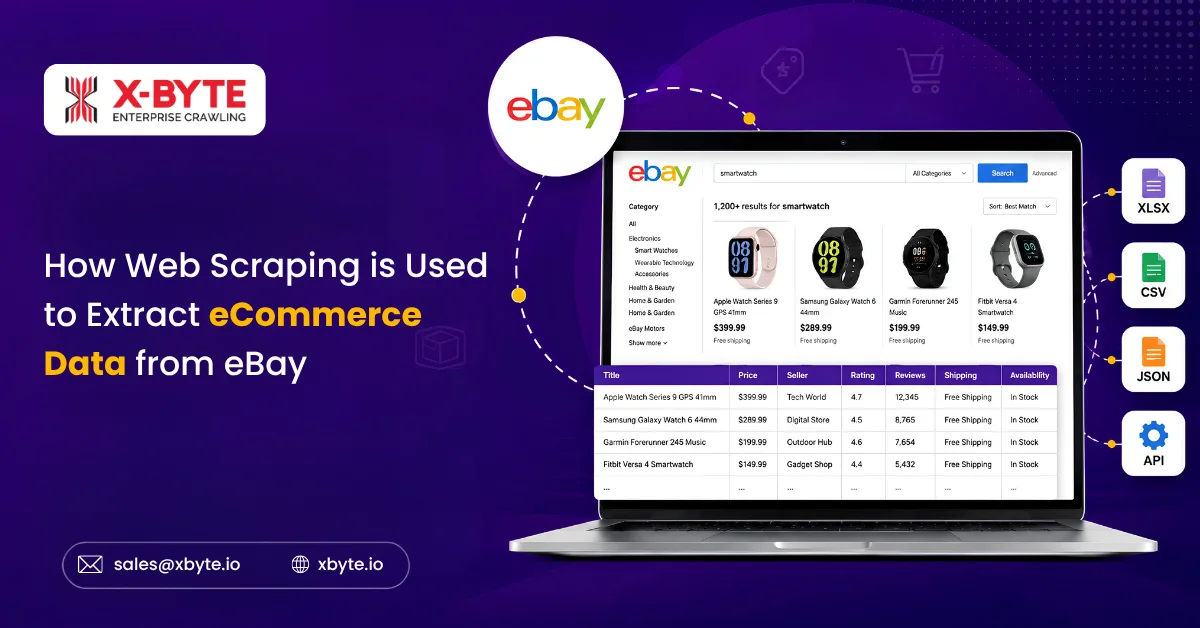
How Web Scraping Is Used to Extract eCommerce Data From eBay
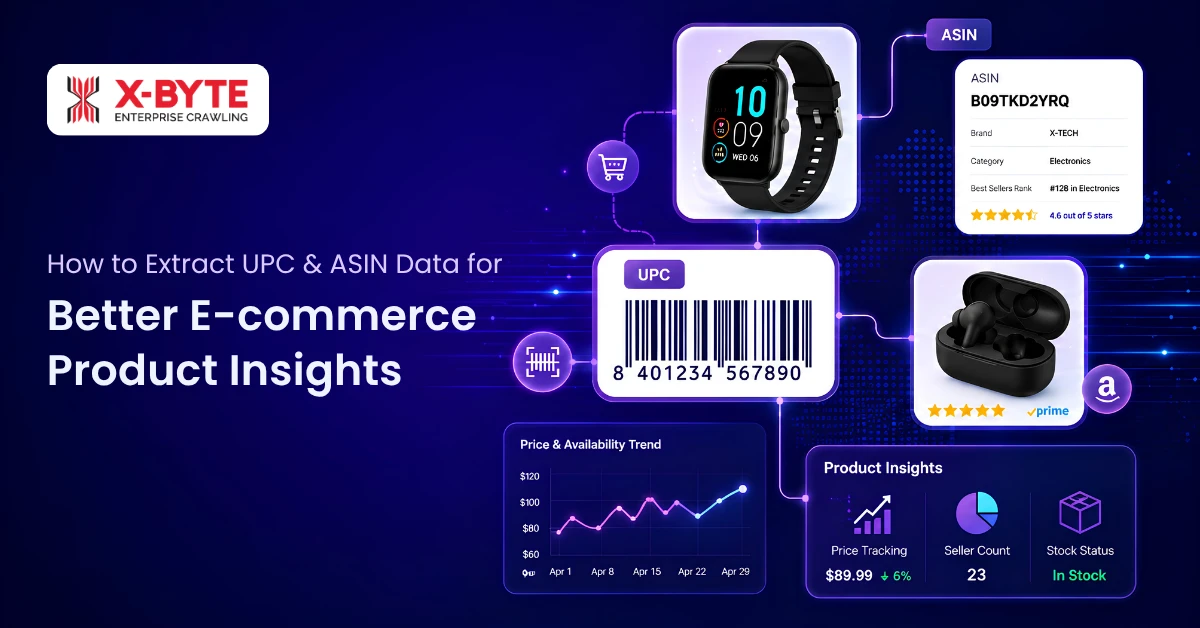
How to Extract UPC & ASIN Data for Better E-commerce Product Insights