

Introduction
Enterprises collect billions of data points daily from websites, marketplaces, and competitors. However, most of this enterprise web data never drives revenue. Why? Because unstructured, unverified data doesn’t inform executive decisions or power AI models effectively.
CEOs and data leaders need trusted, structured, decision-ready information—not fragmented datasets. This is where the concept of “revenue-grade data assets” becomes critical. Turning web data into business revenue requires more than just extraction—it demands a comprehensive enterprise data strategy that transforms raw information into a competitive advantage.
At X-Byte Enterprise Crawling (xbyte.io), we help Fortune-scale companies convert enterprise web data into actionable business intelligence through scalable data extraction and data asset management. Therefore, this guide explores how enterprises monetize web data by building revenue-grade data assets from web sources.
What Is a Revenue-Grade Data Asset?
A revenue-grade data asset is business-critical information that meets enterprise standards for accuracy, compliance, and scalability. Unlike basic web scraping outputs, revenue-grade data assets possess four core attributes that enable effective web data monetization:
- Accuracy and Freshness: Data reflects real-time market conditions with validation protocols that eliminate errors. Moreover, automated quality checks ensure consistency across millions of records.
- Compliance and Governance: All data collection follows legal frameworks, respecting robots.txt files and rate limits. This approach delivers compliant web data for AI and analytics. Additionally, audit trails document every extraction process for regulatory requirements.
- Scalability: Infrastructure handles enterprise volumes—from thousands to billions of data points—without performance degradation. Consequently, businesses scale data operations as markets expand through AI-ready data pipelines.
- Business Alignment: Data collection directly supports KPIs like pricing optimization, market share analysis, or AI model training. This ensures every data point serves a strategic purpose within your data asset management framework.
Enterprises treat revenue-grade data assets as balance-sheet items, not technical byproducts. Financial teams value this data because it generates measurable business outcomes.
Why Do Most Enterprises Fail to Monetize Web Data?
Despite significant investments in data initiatives, many enterprises struggle to extract value from web data. Common pain points include:
- Fragmented Scraping Tools: Marketing teams use one tool, product teams another, and data science teams build custom scripts. This fragmentation creates data silos that prevent unified analysis.
- Low Data Reliability: Scraped data often contains duplicates, formatting errors, and outdated information. Meanwhile, decision-makers reject unreliable datasets, rendering data collection efforts worthless.
- Legal and Compliance Risks: Non-compliant data extraction exposes companies to lawsuits and regulatory penalties. Furthermore, legal teams block data initiatives when compliance frameworks aren’t established.
- Data That Never Reaches Decision-Makers: Technical teams extract data, but it never integrates into dashboards, pricing engines, or executive reports. Therefore, valuable insights remain trapped in data lakes.
The hidden cost of unusable data extends beyond technology investments. Organizations waste strategic opportunities when data doesn’t drive action.
What Framework Do Enterprises Use to Turn Web Data into Revenue?
Successful enterprises follow a five-step framework that transforms raw enterprise web data into revenue-generating assets. This systematic approach—essential for how enterprises monetize web data—ensures data quality, compliance, and business impact through revenue-ready data architecture for enterprises.
Step 1: How Do You Identify Strategic Data Sources?
Revenue-grade data strategies begin with business outcomes, not technology. Ask: “Which external data directly impacts our revenue?”
Identify revenue-impacting data types such as competitor pricing, product availability, customer sentiment, or demand signals. Subsequently, tie each data collection initiative to specific KPIs like margin improvement, market share gains, or conversion rate optimization within your enterprise data strategy.
For example, e-commerce enterprises track competitor pricing across 100,000+ products to maintain competitive positioning. Meanwhile, private equity firms monitor target companies’ digital footprints for M&A valuations. This strategic approach forms the foundation of web data pipelines for enterprise decision-making.
Step 2: What Makes Data Extraction “Enterprise-Grade”?
Enterprise-grade extraction differs fundamentally from basic web scraping. It requires enterprise-grade web scraping solutions with scalable data extraction capabilities that handle complex websites and anti-bot measures.
X-Byte Enterprise Crawling delivers AI-Powered Data Scraping Services designed for Fortune-scale operations. Our infrastructure processes millions of pages daily while maintaining legal compliance and data accuracy through AI-ready data pipelines.
Key capabilities include adaptive extraction that adjusts to website changes automatically, distributed architecture that prevents IP blocking, and real-time validation that flags anomalies immediately.
Step 3: How Do You Ensure Data Quality Meets Executive Standards?
CEOs and CFOs demand trustworthy numbers. Therefore, data validation and quality engineering become non-negotiable components of revenue-grade pipelines.
Quality engineering processes include deduplication algorithms that eliminate redundant records, normalization protocols that standardize formats across sources, and anomaly detection systems that flag suspicious patterns.
For instance, when monitoring 50 competitor websites, validation systems detect price changes exceeding normal ranges and trigger human review. This prevents false signals from reaching pricing algorithms.
Step 4: How Do You Structure Data for AI and Business Intelligence?
Raw enterprise web data rarely fits analytics or AI requirements. Consequently, enterprises transform extracted data into analytics-ready formats through structured processing within their revenue-ready data architecture for enterprises.
X-Byte’s Custom Data Extraction Services deliver compliant web data for AI and analytics in formats optimized for your specific use cases—whether that’s SQL databases, JSON feeds, or API endpoints. These AI-ready data pipelines enable immediate integration into business intelligence platforms, machine learning pipelines, and operational systems.
Structured data enables immediate integration into business intelligence platforms, machine learning pipelines, and operational systems. Moreover, proper structuring through data asset management reduces time-to-insight from weeks to hours.
Step 5: How Do You Operationalize Data Across Enterprise Teams?
Revenue-grade data must flow seamlessly to every team that needs it. Operationalization ensures data reaches dashboards, ML models, pricing engines, and executive reports automatically.
Successful enterprises establish data delivery mechanisms including automated dashboard updates, API integrations with internal systems, and scheduled reports for stakeholders. Additionally, they create data governance protocols that define access rights and usage policies.
Learn more about enterprise-scale implementation in our guide on Enterprise Web Scraping.
What Business Use Cases Generate Revenue from Web Data?
Revenue-grade web data powers multiple high-value enterprise use cases:
- Dynamic Pricing Intelligence: Retailers monitor competitor prices across millions of SKUs to optimize margins. For example, one X-Byte client increased gross margin by 3.2% through real-time pricing adjustments.
- Market Expansion and Demand Forecasting: Companies entering new markets analyze local competitor offerings, pricing trends, and customer reviews. This intelligence reduces market entry risk significantly.
- Competitive Benchmarking: Enterprises track competitor product launches, feature updates, and market positioning. Therefore, they anticipate competitive moves and respond strategically.
- AI Model Training and Enrichment: Machine learning teams require vast, high-quality datasets. Web data provides training examples for recommendation engines, sentiment analysis, and demand prediction models.
- M&A and Market Research: Private equity firms and corporate development teams assess target companies using web-sourced financial signals, customer sentiment, and market presence indicators.
Why Is Compliance Non-Negotiable for Revenue-Grade Data?
US enterprises face significant legal and regulatory scrutiny around data practices. Consequently, compliance frameworks become essential for revenue-grade data strategies.
- Ethical Scraping Practices: Respecting robots.txt files, implementing rate limiting, and avoiding personal data collection protect enterprises from legal exposure. Moreover, ethical practices ensure long-term data source access.
- Data Ownership and Audit Readiness: Revenue-grade systems maintain detailed logs of data sources, collection methods, and processing steps. This documentation proves invaluable during audits or legal reviews.
- Accelerating Enterprise Adoption: When legal and compliance teams approve data sources, adoption accelerates across the organization. Meanwhile, non-compliant data creates bottlenecks that delay strategic initiatives.
At xbyte.io, compliance isn’t an afterthought—it’s built into every extraction pipeline we design.
How Does X-Byte Help Build Revenue-Grade Data Assets?
X-Byte Enterprise Crawling specializes in end-to-end data asset development: sourcing, extraction, structuring, and delivery. Our platform handles Fortune-scale volumes while maintaining data quality and compliance.
- Custom Architecture, Not One-Size-Fits-All Tools: Every enterprise has unique data requirements. Therefore, we design custom extraction architectures that align with your specific business objectives and technical infrastructure.
- Built for AI and Analytics Workloads: Our data pipelines deliver information in formats optimized for machine learning models, business intelligence platforms, and operational systems.
- Long-Term Data Monetization Strategy: We help enterprises build sustainable competitive advantages through proprietary data assets. This approach creates compounding value over time.
Our clients include Fortune 500 retailers, financial services firms, and technology companies that depend on web data for critical business decisions.
When Should Your Enterprise Invest in Revenue-Grade Web Data?
Specific business signals indicate it’s time to upgrade your data strategy:
- Scaling AI Initiatives: When machine learning projects require vast training datasets, revenue-grade web data becomes essential.
- Entering New Markets: Market expansion demands comprehensive competitive intelligence that only systematic web data extraction provides.
- Inconsistent Reporting: If different teams report conflicting market data, you need unified, trusted data sources.
- Data-Driven Pricing Failures: When pricing decisions lack real-time competitive context, margin opportunities disappear.
The cost of waiting often exceeds implementation costs. Meanwhile, first-movers gain competitive advantages that late adopters struggle to overcome.
Ready to Transform Web Data into Revenue?
Revenue-grade data assets separate market leaders from followers. Enterprises that systematically convert web data into trusted business intelligence make faster, better-informed decisions.
At X-Byte Enterprise Crawling (xbyte.io), we’ve helped dozens of Fortune-scale companies build data strategies that generate measurable business value.
For CEOs: Request a Revenue Data Strategy Session to explore how proprietary data assets create competitive moats.
For Data Heads: Schedule an architecture assessment to evaluate your current data infrastructure and identify improvement opportunities.
Contact X-Byte today to discuss your enterprise data requirements.
Frequently Asked Questions
 ✯ Alpesh Khunt ✯

Related Blogs
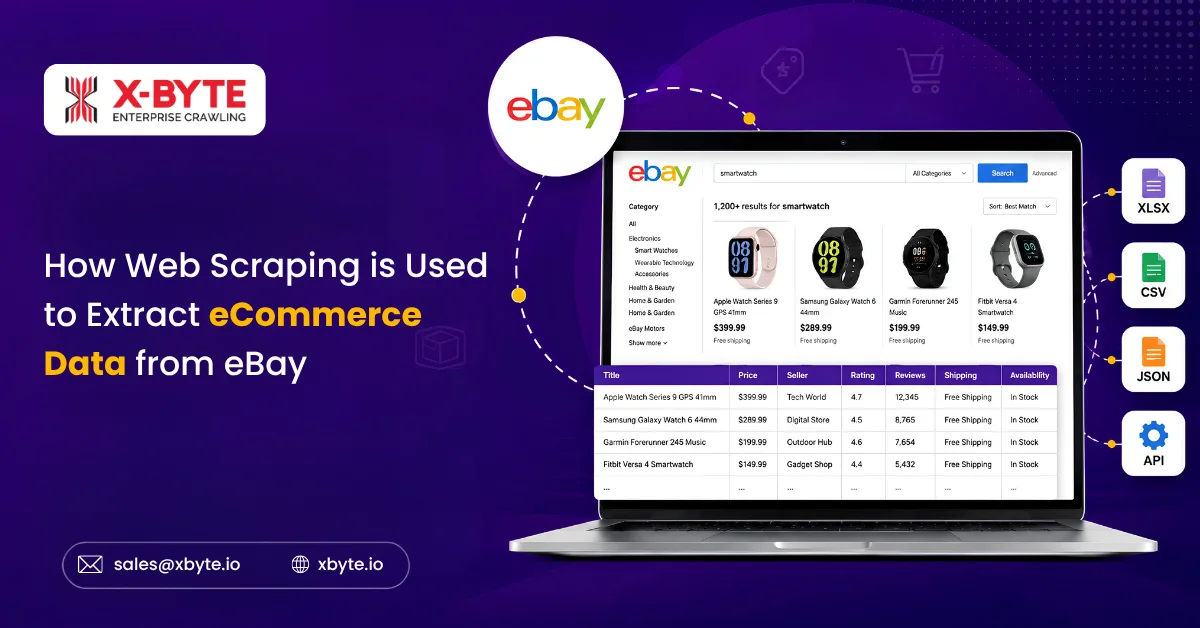
How Web Scraping Is Used to Extract eCommerce Data From eBay
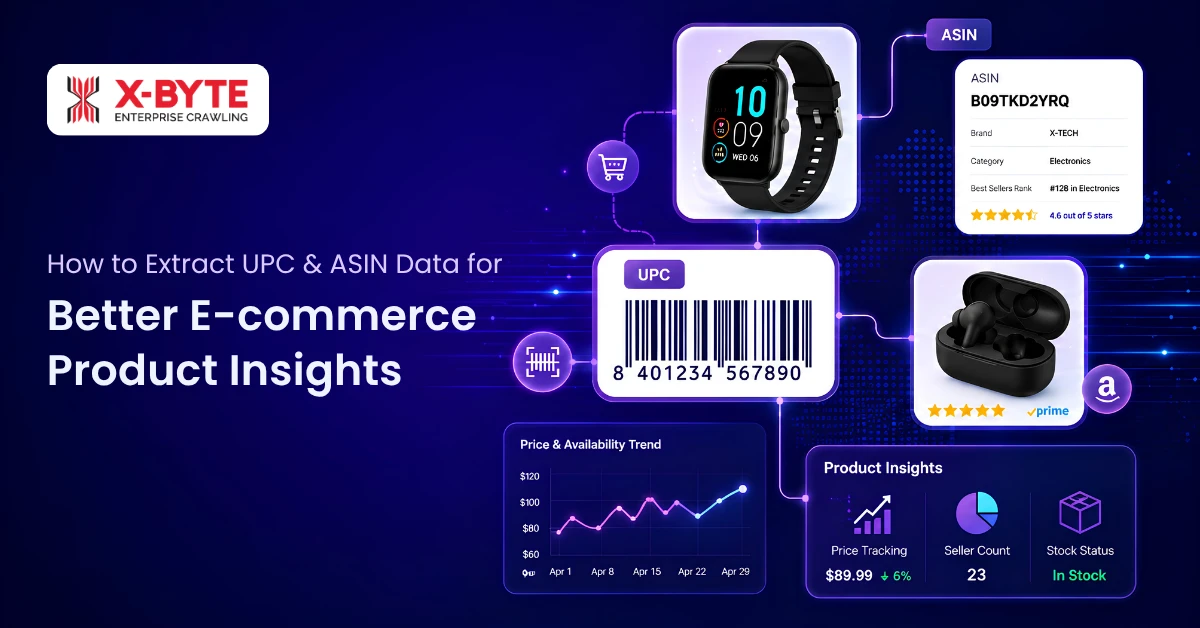
How to Extract UPC & ASIN Data for Better E-commerce Product Insights