

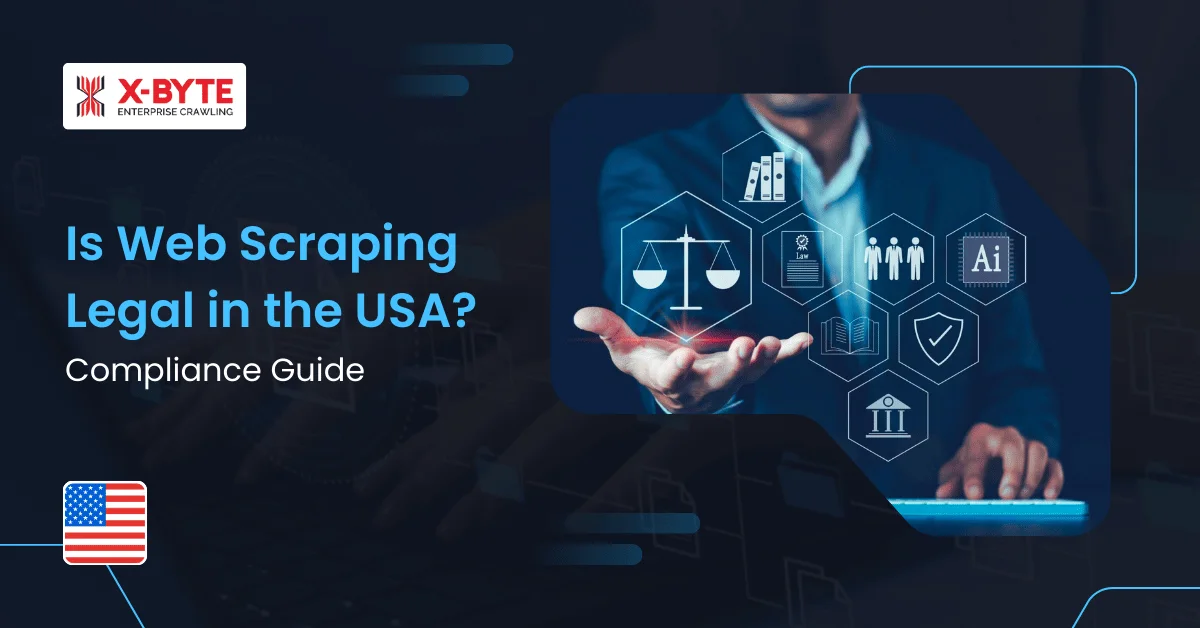
Enterprise decision-makers face a critical question today: is web scraping legal in the United States? The answer shapes how organizations collect competitive intelligence, monitor markets, and fuel data-driven strategies. However, legal uncertainty creates real business risk that demands careful attention.
Federal laws like the Computer Fraud and Abuse Act create potential liability for data collection activities. Meanwhile, state privacy regulations such as the California Consumer Privacy Act add compliance layers that vary by jurisdiction. High-profile lawsuits between major corporations have left many CTOs and legal teams uncertain about safe practices. Recent court decisions offer guidance yet fail to provide absolute clarity.
Organizations that understand these boundaries gain competitive advantages. Those that ignore them face lawsuits, injunctions, and reputational damage. Therefore, compliance represents both protection and opportunity.
X-Byte Enterprise Crawling partners with organizations to navigate this landscape. Our compliance-first approach at X-Byte.io ensures enterprises extract valuable data without crossing legal boundaries. This guide breaks down everything you need to know about lawful data extraction.
Compliant Web Scraping Services USA: What Enterprises Must Know
Is web scraping legal in the USA depends entirely on methodology and execution. Legality centers on how organizations collect data, not whether they collect it. Consequently, the distinction between ethical extraction and unauthorized access becomes paramount for enterprise operations.
Understanding the difference between public data and protected data forms the foundation of compliant practices. Public data sits openly accessible without authentication barriers. Protected data requires login credentials, exists behind paywalls, or carries explicit access restrictions.
Enterprise buyers must prioritize compliance architecture when selecting data partners. In-house scraping scripts often create legal blind spots. Teams lack expertise in evolving regulations. Additionally, technical implementations may inadvertently violate terms or bypass protections.
Enterprise web scraping compliance services provide structured frameworks. These services incorporate legal reviews, technical safeguards, and documented processes. X-Byte delivers legal web scraping solutions USA enterprises trust for mission-critical data operations.
US Web Scraping Laws Explained for CTOs
Understanding US web scraping laws requires examining multiple legal frameworks. Each creates different obligations and risks for data collection activities. CTOs must develop comprehensive awareness of these statutes to guide organizational data strategy.
The CFAA web scraping question dominates legal discussions. This federal law prohibits unauthorized computer access and applies criminal penalties for violations. Courts interpret its application to web scraping differently across jurisdictions. Some rulings suggest accessing publicly available information does not violate the statute. Others emphasize terms of service violations as potential liability triggers. The ambiguity creates planning challenges for enterprise data teams.
Terms of Service violations create contract law implications that extend beyond federal statutes. Websites establish usage rules through these agreements. Scraping activities that breach stated terms may constitute breach of contract. Damages vary based on demonstrated harm and the specific provisions violated.
State-level privacy laws add complexity layers. California, Virginia, Colorado, and other states enforce distinct requirements. How CTOs ensure scraping compliance involves monitoring all applicable jurisdictions. Multinational operations face particularly intricate compliance matrices.
The hiQ vs LinkedIn Case – What It Really Means
The hiQ vs LinkedIn case represents landmark web scraping litigation. This case examined whether collecting publicly accessible LinkedIn profile data violated federal computer fraud laws.
Courts ruled that scraping public data does not automatically trigger CFAA liability. The reasoning emphasized that information visible without login credentials exists in the public domain. LinkedIn could not claim unauthorized access to data it displayed openly.
However, enterprises must understand critical limitations. The ruling does not grant unlimited scraping rights. Technical barriers, rate limiting, and platform protections still merit respect. Furthermore, privacy considerations extend beyond the CFAA framework.
Enterprise interpretation requires nuance. Public accessibility does not eliminate risk. Organizations still face potential claims under contract law, state privacy statutes, and intellectual property frameworks.Our expert helps clients navigate these intersecting legal boundaries through web scraping legal consulting services.
CCPA & Privacy Compliance in Data Collection
CCPA compliance requirements significantly impact web scraping operations. This California law defines personal information broadly. Names, email addresses, browsing histories, and device identifiers all qualify as protected data categories.
Consumer rights under CCPA create operational obligations. Individuals may request disclosure of collected information. They possess rights to deletion and opt-out mechanisms. Organizations scraping personal data must accommodate these requirements or face enforcement actions.
GDPR & CCPA compliant web scraping demands careful data handling practices. Organizations should implement processes for identifying personally identifiable information. Anonymization techniques reduce compliance burdens. Documentation demonstrates good faith efforts to regulators.
Risk escalates when scraping PII without proper safeguards. Penalties include statutory damages and regulatory fines. Class action exposure compounds financial liability. X-Byte.io implements privacy-aware extraction protocols that minimize these risks for enterprise clients.
Public vs Private Data – Where Legal Lines Exist
Public vs private data scraping rules establish fundamental compliance boundaries. Public websites display information accessible to any visitor. This content generally carries fewer restrictions for collection purposes.
Gated content presents different considerations. Login-protected areas require authentication. Scraping behind these barriers may constitute unauthorized access. Similarly, paywall content involves contractual and potentially copyright protections.
API misuse creates additional liability exposure. Platforms provide APIs with specific usage terms. Exceeding rate limits or circumventing restrictions violates those agreements. Furthermore, DMCA and data scraping intersect when technical protection measures exist.
Robots.txt files communicate access preferences. Respecting these directives demonstrates good faith. While not legally binding in all contexts, ignoring them strengthens adverse claims against scrapers. FTC data compliance guidelines emphasize transparent and fair data practices.
Legal Risks of Non-Compliant Web Scraping
Penalties for illegal data scraping extend beyond theoretical concerns. Organizations face concrete consequences when extraction practices cross legal boundaries. Risk management requires understanding the full spectrum of potential outcomes.
Civil lawsuits represent primary enforcement mechanisms that target scrapers. Website operators pursue claims for trespass to chattels, breach of contract, and unfair competition. Damages include actual losses plus potential statutory multipliers. Litigation costs compound financial exposure regardless of outcome. Even successful defenses require substantial legal expenditure.
Courts issue injunctions halting scraping operations immediately upon finding violations. These orders force immediate cessation of data collection activities. Business models dependent on that data face severe disruption. Violating injunctions triggers contempt proceedings with additional penalties including potential criminal liability.
Technical countermeasures include IP blocking and access restrictions that platforms deploy proactively. Platforms identify and ban scraping activities using sophisticated detection methods. Workarounds may escalate legal exposure significantly. Reputational damage follows public disputes with major platforms and can affect customer relationships.
Vendor liability exposure affects organizations using third-party scrapers for data acquisition. Poor vendor practices create downstream liability for the purchasing organization. Due diligence on data sources becomes essential risk management practice.
Enterprise Web Scraping Compliance Checklist
A web scraping compliance checklist for enterprises provides actionable guidance. Decision-makers should verify these elements before initiating extraction projects.
- Only scrape publicly accessible data – Verify content displays without authentication requirements
- Avoid bypassing authentication – Never circumvent login walls or session protections
- Respect rate limits – Implement throttling to avoid server overload
- Avoid personal identifiable information (PII) – Filter or anonymize sensitive data elements
- Maintain audit logs – Document extraction activities for compliance verification
- Work with SLA-backed vendor – Partner with providers offering contractual compliance guarantees
Why Enterprises Choose Compliant Web Scraping Services USA Instead of In-House Scripts?
Understanding how to scrape data legally in the US requires comparing internal development against specialized vendors. The differences impact compliance, performance, and total cost of ownership.
Compliant data extraction services for enterprises eliminate technical debt and legal uncertainty. X-Byte.io provides the infrastructure, expertise, and accountability that internal teams struggle to maintain.
| In-House Scripts | Compliant Vendor (X-Byte) |
| Legal blind spots | Compliance-first architecture |
| No SLA guarantees | 99% accuracy SLA |
| IP bans and blocks | Proxy & infrastructure management |
| No legal review process | Pre-deployment compliance audit |
How X-Byte Ensures Legal & Ethical Data Extraction
X-Byte.io builds every engagement around compliance principles that protect enterprise clients. Our infrastructure reflects years of navigating evolving regulations and court decisions across multiple jurisdictions. We understand that enterprises require both reliable data and defensible practices.
- Compliance-first infrastructure: Every extraction pipeline incorporates legal boundary checks before execution. Systems flag potential issues automatically and alert teams before problems emerge. This proactive approach prevents violations rather than addressing them reactively.
- Proxy rotation and rate management: Distributed requests prevent server overload and maintain positive relationships with source platforms. Responsible extraction patterns respect platform resources. Our systems adapt request frequency based on server response patterns.
- No scraping of restricted areas: Authentication barriers remain intact throughout our operations. We never bypass login walls or access gated content without proper authorization. This principle remains non-negotiable regardless of client requests.
- Legal boundary assessments: Each project receives thorough review against applicable laws and precedents. Clients receive documented risk analyses before projects commence. Our team monitors regulatory changes affecting ongoing engagements.
- Secure data handling: Encryption protects data in transit and at rest using industry-standard protocols. Access controls limit exposure to authorized personnel only. Regular security audits verify protection measures function correctly.
- NDA and confidentiality: Contractual protections safeguard client information and business intelligence throughout engagement. We understand the sensitive nature of competitive data projects.
- US-focused compliance understanding: Deep familiarity with federal and state regulations ensures appropriate practices for domestic operations. We track legislative developments affecting web scraping across all fifty states.
When Web Scraping Becomes Illegal?
Certain practices cross legal boundaries regardless of intent. Recognizing these red flags protects organizations from liability. Understanding can businesses legally scrape public data requires knowing where limits exist.
- Bypassing login walls: Using stolen credentials or exploiting authentication vulnerabilities violates computer fraud statutes
- Circumventing technical barriers: Defeating CAPTCHAs, rate limiters, or access controls may trigger DMCA anti-circumvention provisions
- Scraping copyrighted datasets: Wholesale copying of protected databases creates intellectual property claims
- Ignoring cease and desist notices: Continued scraping after formal objection strengthens willfulness arguments
- Collecting PII without consent: Privacy laws impose specific requirements for personal data collection
Should You Build In-House or Outsource to a Compliant Vendor?
Strategic considerations extend beyond immediate costs when evaluating data extraction approaches. CTOs and CFOs must evaluate total risk exposure alongside operational expenses. Making the right choice affects compliance posture for years ahead.
- Legal risk cost versus vendor cost: Single lawsuit expenses often exceed years of vendor fees significantly. Insurance may not cover intentional violations or negligent practices. Compliance-focused partners transfer risk through contractual indemnification provisions. This risk transfer alone justifies vendor relationships for many organizations.
- Risk-adjusted ROI: Internal development creates hidden liabilities that standard financial analysis misses. Vendor relationships provide predictable costs and bounded exposure profiles. Financial modeling should incorporate potential penalty scenarios and their probability-weighted costs.
- Scalability considerations: Internal teams struggle with demand spikes during critical business periods. Vendor infrastructure scales dynamically to meet fluctuating requirements. Projects expand without proportional headcount increases or capital expenditures.
- Governance frameworks: Established vendors maintain documented processes that satisfy auditor requirements. Audit trails satisfy compliance inquiries from legal and regulatory bodies. Internal programs often lack equivalent rigor and documentation quality.
- Long-term compliance: Regulations evolve continuously at federal and state levels. Dedicated vendors monitor changes and adapt practices proactively. Internal teams balance compliance maintenance against other pressing priorities.
Protect Your Enterprise From Legal Scraping Risks
Data-driven organizations need reliable, lawful extraction capabilities to compete effectively. X-Byte.io delivers enterprise-grade solutions designed around compliance from inception. Our approach ensures your organization gains competitive intelligence without legal exposure.
Our services include:
- Free compliance consultation with experienced data extraction specialists
- Infrastructure review examining current data collection practices
- Risk audit identifying potential vulnerability areas in existing workflows
- Custom compliant scraping architecture tailored to specific business requirements
Ready to get started? Contact X-Byte.io today to request your legal-compliance assessment. Talk to a web scraping compliance expert and get a compliance-safe data extraction plan tailored to your enterprise needs. Our team responds within 24 hours to begin your consultation.
Frequently Asked Questions
 ✯ Alpesh Khunt ✯

Related Blogs
The Role of Data Annotation in Large Language Model Training and Performance
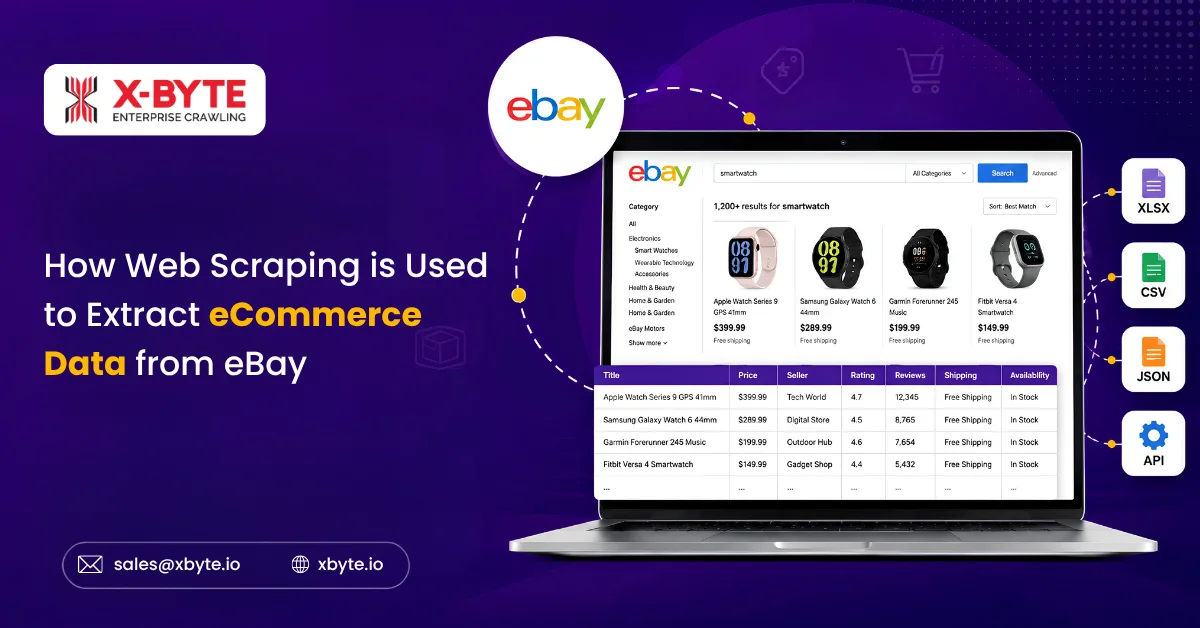
How Web Scraping Is Used to Extract eCommerce Data From eBay