
Introduction
Every business decision today hinges on one critical resource: data. However, gathering meaningful insights from the vast ocean of online information requires more than basic crawling techniques. This is where a scalable data pipeline becomes essential for organizations seeking competitive advantages in their markets.
At X-Byte Enterprise Crawling, we understand that modern enterprises need robust systems capable of handling millions of web pages without breaking a sweat. Building effective web scraping solutions demands careful planning, strategic architecture choices, and deep technical expertise that goes beyond simple scripts.
Business intelligence teams rely heavily on accurate, timely data to shape marketing strategies and operational decisions. Meanwhile, competitive analysis becomes virtually impossible without access to fresh market information. Therefore, understanding how to create scalable web scraping solutions has become a non-negotiable skill for data-driven organizations.
This comprehensive guide will walk you through everything you need to know about constructing efficient data collection systems. We will explore architectural patterns, tackle common obstacles, and examine proven strategies that transform raw web content into actionable business insights.
What is a Scalable Data Pipeline?
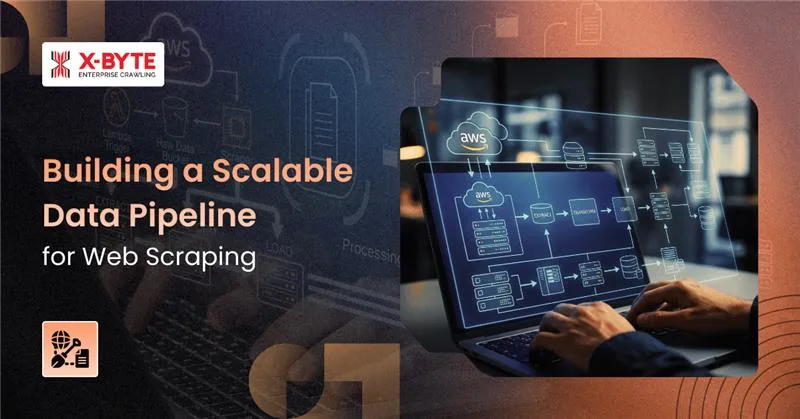
Real estate web scraping services USA providers and enterprises across various sectors need efficient workflows for processing massive datasets. A data pipeline architecture represents the systematic flow of information from source websites through various processing stages until it reaches its final destination in your data warehouse or analytics platform.
Think of it as an assembly line for digital information. Raw materials enter at one end, undergo multiple transformations, and emerge as refined, usable products on the other side. However, unlike physical manufacturing, data extraction pipelines must handle unpredictable inputs, varying formats, and constantly changing source structures.
Why Scalability Matters
Scalability determines whether your system gracefully handles growth or crashes under pressure. Consider an e-commerce company monitoring competitor prices across 50,000 product pages. Initially, a simple script might suffice. Nevertheless, when requirements expand to tracking a million products across multiple regions, everything changes dramatically.
X-Byte Enterprise Crawling has witnessed countless organizations struggle with this exact challenge. Systems designed for small-scale operations simply cannot accommodate exponential growth without fundamental restructuring. Consequently, planning for scalability from day one saves tremendous resources down the road.
Key Components of a Data Pipeline
| Factors | Function |
| Data Collectors | Crawlers and scrapers that fetch raw content from target websites |
| Message Queues | Buffer systems managing workflow between stages (Apache Kafka, RabbitMQ) |
| Processors | Transformation engines cleaning, parsing, and enriching raw data |
| Storage Systems | Databases and warehouses for structured data persistence |
| Monitoring Tools | Dashboards tracking performance, errors, and throughput metrics |
Challenges in Building Scalable Data Pipelines for Web Scraping
Constructing reliable web scraping infrastructure presents numerous hurdles that can derail even well-planned projects. Understanding these obstacles beforehand helps teams prepare effective countermeasures and allocate resources appropriately.
Data Extraction at Scale
Extracting information from thousands of websites simultaneously strains computing resources and network bandwidth. Each target site presents unique structural challenges, requiring specialized parsing logic. Additionally, websites frequently update their layouts, breaking existing extraction rules without warning.
X-Byte Enterprise Crawling (xbyte.io) addresses these issues through intelligent selector algorithms that adapt to minor structural changes automatically. This approach reduces maintenance overhead while maintaining extraction accuracy across diverse source formats.
Handling Large Data Volumes
Big data processing capabilities become essential when daily collection volumes exceed terabytes. Traditional database systems buckle under such loads, requiring distributed storage solutions and parallel processing frameworks. Furthermore, network latency and bandwidth constraints create bottlenecks that cascade through entire systems.
Managing Data Quality and Freshness
Stale data delivers zero value. Meanwhile, poor-quality records contaminate downstream analyses and decision-making processes. Organizations must implement rigorous validation checkpoints throughout their pipelines. Duplicate detection, format standardization, and anomaly flagging require continuous attention and refinement.
Infrastructure Scaling Challenges
Demand fluctuations catch unprepared teams off guard. Holiday shopping seasons might triple data requirements overnight. Political events could spark urgent monitoring needs. Systems lacking elastic scaling capabilities either crash under sudden loads or waste resources during quiet periods.
Primary Scaling Obstacles:
- Rate limiting and IP blocking by target websites
- Dynamic content rendered through JavaScript frameworks
- Anti-bot detection mechanisms and CAPTCHAs
- Maintaining session states across distributed crawlers
- Coordinating extraction timing to respect server limits
Best Practices for Building Scalable Data Pipelines
Following best practices for web scraping data pipelines dramatically improves project outcomes. These strategies represent lessons learned from countless implementations across various industries and use cases.
Leverage Cloud-Based Services
Cloud platforms offer unmatched flexibility for scaling operations up or down based on current demands. Amazon Web Services, Google Cloud Platform, and Microsoft Azure provide managed services that eliminate infrastructure maintenance burdens. Consequently, engineering teams focus on business logic rather than server management.
Serverless architectures particularly suit burst workloads common in web scraping scenarios. Functions spin up instantly when needed and disappear when idle, optimizing cost efficiency. Moreover, geographic distribution of cloud resources enables faster access to target websites worldwide.
Implement Distributed Processing
Single-server architectures hit performance ceilings quickly. Distributed processing frameworks like Apache Kafka enable horizontal scaling by spreading workloads across multiple machines. Apache Hadoop handles massive batch processing jobs efficiently. Together, these technologies form the backbone of enterprise-grade scalable data pipeline architecture for data extraction.
Prioritize Data Pre-processing
Raw scraped content typically contains substantial noise. HTML tags, navigation elements, advertisements, and irrelevant sections clutter valuable information. Implementing robust cleaning procedures early in the pipeline prevents garbage from propagating downstream. Text normalization, encoding standardization, and format conversions prepare data for analytical consumption.
Automate with Intelligent Schedulers
Automated data scraping eliminates manual intervention while ensuring consistent execution. Modern orchestration tools like Apache Airflow coordinate complex multi-stage workflows reliably. Dependency management prevents downstream tasks from executing before prerequisites complete successfully.
X-Byte Enterprise Crawling incorporates sophisticated scheduling mechanisms that optimize crawling patterns based on target website behaviors. Peak traffic hours, update frequencies, and historical response times inform intelligent timing decisions that maximize yield while minimizing detection risks.
| Strategy | Advantages | Implementation |
| Cron-Based Scheduling | Predictable execution timing | Native OS schedulers or Airflow |
| Event-Driven Triggers | Responsive to external change | Webhook Integrations |
| Adaptive Rate Limiting | Respects target server limits | Token bucket algorithms |
Choosing the Right Tools and Technologies
Selecting appropriate technologies determines project success more than any other factor. Each stage of your building scalable data pipelines for web scraping journey requires careful evaluation of available options against specific requirements.
Data Collection Tools
Scrapy stands out as Python’s premier web scraping framework, offering built-in support for concurrent requests, automatic throttling, and extensive middleware options. Its selector syntax simplifies content extraction from complex page structures. However, JavaScript-heavy websites require additional tools like Selenium or Playwright for proper rendering.
Apache NiFi provides visual workflow design for data ingestion scenarios. Drag-and-drop interfaces make pipeline construction accessible to non-programmers. Nevertheless, complex transformation logic often necessitates custom processors that demand development expertise.
Message Queue Options
Apache Kafka excels at handling high-throughput streaming scenarios with guaranteed message delivery. Its distributed architecture ensures fault tolerance and horizontal scalability. Kafka Streams enables real-time processing without requiring separate cluster infrastructure.
RabbitMQ offers simpler deployment and administration compared to Kafka. Traditional message queue semantics suit many batch-oriented workloads perfectly. Smaller teams often prefer RabbitMQ’s gentler learning curve and lower operational overhead.
Storage Solutions
PostgreSQL handles structured data storage needs reliably with excellent query performance. MongoDB accommodates semi-structured documents common in web scraping outputs. Data lakes built on cloud object storage provide cost-effective archival for raw collected content.
| Tools | Best Suit for | Pros | Cons |
| Scrapy | Large-scale extraction | Fast, extensible, mature ecosystem | Steeper learning curve |
| Apache Kafka | Real-Time Streaming | High throughput, fault tolerance | Complex operations |
| Apache NiFi | Visual workflows | User-friendly interface | Resource intensive |
| Hadoop | Batch processing | Handles massive datasets | High setup complexity |
Real-World Use Cases
Organizations across numerous industries have transformed their operations through effective data collection strategies. These examples demonstrate tangible benefits achieved by implementing proper web scraping architectures.
E-Commerce Price Intelligence
A major online retailer deployed a comprehensive pricing surveillance system monitoring 2.3 million competitor product listings daily. Their pipeline processed approximately 15 terabytes of raw HTML weekly, extracting current prices, stock levels, and promotional offers. As a result, dynamic pricing algorithms adjusted their catalog in near real-time, boosting profit margins by 12% within six months.
Financial Market Analysis
Investment firms increasingly rely on alternative data sources for market insights. One hedge fund built a news sentiment analysis pipeline ingesting articles from 500+ financial publications worldwide. Natural language processing models scored content sentiment in seconds, enabling faster trading decisions. Their alpha generation improved measurably after integrating these signals into existing quantitative models.
Real Estate Market Monitoring
Property technology companies leverage continuous listing aggregation to power valuation models and market trend analysis. One platform tracks 8 million active listings across regional portals, updating property characteristics, asking prices, and days-on-market metrics hourly. Buyers receive instant alerts when matching properties appear, while sellers gain accurate comparative market analyses.
Healthcare Research Applications
Pharmaceutical companies monitor clinical trial registries, medical literature databases, and regulatory filings systematically. Structured extraction of trial outcomes, adverse events, and approval statuses accelerates competitive intelligence gathering. Research teams identify emerging therapeutic areas and potential acquisition targets months ahead of competitors relying on manual review processes.
How X-Byte’s Web Scraping Solutions Can Help?
X-Byte Enterprise Crawling offers comprehensive data extraction services designed specifically for enterprise requirements. Our platform combines cutting-edge technology with deep domain expertise to deliver exceptional results consistently.
Turnkey Pipeline Solutions
Our team handles every aspect of pipeline construction, from initial architecture design through ongoing maintenance. Clients receive production-ready systems without investing months in development and testing. Moreover, our solutions scale seamlessly as data requirements grow, eliminating painful migration projects down the road.
Customized Data Delivery
Every organization has unique data format preferences and integration requirements. X-Byte delivers cleaned, structured outputs compatible with your existing analytics stack. Whether you need JSON feeds, database synchronization, or cloud storage deposits, we accommodate your workflow.
Why Choose X-Byte Enterprise Crawling:
- Proven track record with Fortune 500 enterprises
- 9% uptime SLA guarantees for critical data feeds
- Compliance with GDPR, CCPA, and industry regulations
- Dedicated support teams available around the clock
- Transparent pricing with no hidden infrastructure costs
Conclusion
Constructing effective data collection infrastructure demands careful planning, appropriate technology choices, and continuous optimization. Organizations that master these disciplines gain significant competitive advantages through superior market intelligence and faster decision-making capabilities.
The journey toward scalable data pipeline excellence requires expertise that many internal teams lack. Partnering with experienced providers like X-Byte Enterprise Crawling accelerates time-to-value while reducing implementation risks substantially.
Ready to transform your data collection capabilities? Contact X-Byte Enterprise Crawling today for a personalized consultation. Our specialists will assess your requirements and recommend optimal approaches tailored to your specific business objectives. Start your journey toward data-driven excellence now.
Frequently Asked Questions
 ✯ Alpesh Khunt ✯

Related Blogs

How to Monitor Flash Sales and Discount Trends Across Online Stores
Shopify Vs WooCommerce: Which Platform is Easier to Scrape?