


What is web data governance and why do enterprises need it?
Web data governance is the systematic approach enterprises use to ensure web-sourced data remains accurate, compliant, and trustworthy throughout its lifecycle. In today’s data-driven business environment, organizations extract critical intelligence from web sources to power analytics, AI models, and strategic decisions. However, without proper governance, this data can introduce significant risks.
Enterprise web data governance combines three essential pillars: validation to ensure accuracy, versioning to maintain audit trails, and continuous monitoring to detect issues in real time. Together, these practices transform raw web data into enterprise-grade intelligence that compliance teams can defend and executives can trust.
At X-Byte Enterprise Crawling, we’ve seen how ungoverned web data creates regulatory exposure, operational failures, and costly decision errors. Therefore, implementing a robust governance framework isn’t optional—it’s a business imperative.
Why is web data governance now a board-level priority?
Three converging forces have elevated web data governance to the executive agenda.
First, regulatory pressure continues to intensify. SOC 2 compliance, GDPR requirements, and CCPA regulations demand documented data provenance and quality controls. Companies face substantial fines when they cannot prove their data handling practices meet regulatory standards. Moreover, industry-specific regulations in finance and healthcare add additional compliance layers.
Second, AI and analytics initiatives depend heavily on external data quality. Machine learning models trained on flawed web data produce unreliable predictions. Analytics dashboards built on inconsistent data sources lead executives to make million-dollar decisions based on faulty intelligence. Consequently, the quality of web-sourced data directly impacts business outcomes.
Third, unvalidated web data introduces operational risk. Website structure changes, missing data fields, and source outages can silently corrupt downstream systems. Without governance mechanisms, these issues often go undetected until they cause visible business impact. By then, the damage is done.
What are the core pillars of enterprise web data governance?
Effective web data governance rests on three foundational pillars that work together to ensure data integrity.
How does data validation ensure accuracy you can defend?
Data validation represents your first line of defense against poor-quality web data. This process systematically checks incoming data against predefined quality standards before it enters your systems.
Schema validation confirms that data fields match expected formats and data types. For example, if your system expects numeric pricing data, validation rules flag text values or missing entries immediately. This prevents downstream processing errors that could compromise entire analytical workflows.
Anomaly detection identifies statistical outliers and unexpected patterns. When product prices suddenly spike by 500% or historical trends break dramatically, validation systems raise alerts. These anomalies often signal scraping errors, source changes, or data quality issues requiring investigation.
Duplicate and outlier handling ensures data consistency. Web sources frequently contain redundant information or extreme values that skew analysis. Validation processes identify and resolve these issues systematically rather than allowing them to pollute your datasets.
Source reliability scoring adds another critical layer. Not all web sources provide equal quality. Validation systems track source accuracy over time, flagging unreliable sources and adjusting confidence scores accordingly. This historical perspective helps teams prioritize high-quality sources.
X-Byte Enterprise Crawling implements comprehensive validation across all web data extraction pipelines. Our validation systems catch issues before they impact your business operations.
Why is data versioning essential for audit-ready change control?
Data versioning creates a complete historical record of how datasets evolve over time. This capability proves invaluable for compliance audits, troubleshooting, and maintaining consistency across analytical systems.
Dataset lineage and rollback capability preserve every version of your data. When issues emerge, teams can quickly identify when problems started and roll back to known-good versions. This time-travel capability prevents extended outages and accelerates incident resolution.
Historical snapshots support compliance audits by documenting exactly what data existed at any point in time. Auditors can verify that your systems used appropriate data for specific decisions or regulatory filings. Without versioning, proving historical data states becomes nearly impossible.
Model retraining consistency ensures AI systems remain stable. Machine learning models require consistent training data to produce reliable results. When teams retrain models using different data versions unknowingly, model performance degrades unpredictably. Versioning eliminates this risk by making data versions explicit and trackable.
Furthermore, versioning enables impact analysis. When data quality issues surface, teams can quickly identify which downstream systems and decisions might be affected. This visibility accelerates remediation and prevents cascading failures.
Our enterprise web data engineering services at xbyte.io include robust versioning systems designed for regulated industries where audit trails are non-negotiable.
How does continuous monitoring enable real-time governance?
Continuous monitoring represents the operational backbone of web data governance. Rather than discovering issues after they’ve caused damage, monitoring systems detect problems immediately and trigger appropriate responses.
Freshness SLAs ensure data updates occur on schedule. Business decisions often depend on timely information. Monitoring systems track update frequencies and alert teams when data becomes stale. This proactive approach prevents decisions based on outdated intelligence.
Drift detection identifies when web sources change structure or content patterns. Websites frequently redesign pages, alter data formats, or move information to new locations. Monitoring systems detect these changes automatically and alert teams to adjust extraction logic accordingly.
Compliance alerts and comprehensive logging create audit trails that satisfy regulatory requirements. Every data extraction, validation failure, and system change gets logged with timestamps and context. This documentation proves essential during compliance audits and internal investigations.
Source uptime and failure tracking monitors the availability and reliability of web sources. When sources become unavailable or start returning errors, monitoring systems notify teams immediately. This rapid response minimizes data gaps and maintains pipeline reliability.
Additionally, monitoring enables performance optimization. By tracking extraction speeds, resource usage, and success rates, teams identify bottlenecks and opportunities for improvement. This operational intelligence keeps pipelines running efficiently at scale.
What governance architecture do CIOs and compliance teams need?
Enterprise web data governance requires purpose-built architecture that addresses both technical and organizational requirements.
A centralized governance layer provides unified oversight across all web data pipelines. Rather than managing governance separately for each data source, centralized systems apply consistent policies, validation rules, and monitoring standards. This consistency simplifies compliance and reduces operational overhead.
Role-based access controls ensure only authorized personnel can access, modify, or approve data and configurations. Different team members require different permissions. Data engineers need pipeline access, while compliance officers require audit logs but not system modification rights. Granular permissions protect sensitive data while enabling efficient workflows.
Metadata and documentation standards make datasets discoverable and understandable. Teams must document data sources, extraction methods, quality rules, and known limitations. Without proper documentation, downstream users cannot assess whether data fits their use cases. Standardized metadata transforms disparate datasets into a coherent data asset library.
Version control extends beyond data to include pipeline configurations and validation rules. When teams modify extraction logic or quality standards, those changes must be tracked, reviewed, and documented. This configuration management prevents unauthorized changes and maintains system stability.
Integration with existing enterprise systems ensures governance doesn’t operate in isolation. Data catalogs, security systems, and compliance platforms must connect with governance infrastructure. This integration provides unified visibility and streamlines compliance workflows.
Learn more about building trustworthy web data pipelines that integrate seamlessly with enterprise architecture.
What business impact does governed web data deliver?
Effective web data governance creates measurable business value across multiple dimensions.
Faster executive decisions result from trusting data quality. When leadership knows data has been validated and monitored, they make decisions confidently without lengthy verification processes. This speed advantage compounds over time, enabling organizations to capitalize on opportunities competitors miss.
Reduced regulatory risk protects organizations from fines and reputational damage. Documented governance practices demonstrate due diligence to auditors and regulators. Moreover, proactive quality controls prevent compliance violations before they occur. This risk reduction translates directly to balance sheet protection.
AI-ready, analytics-grade datasets accelerate digital transformation initiatives. Data science teams spend less time cleaning data and more time extracting insights. Machine learning models perform more reliably because they train on consistent, high-quality data. These improvements shorten time-to-value for AI investments.
Higher ROI from data investments occurs when organizations maximize data asset utilization. Governed data gets reused across multiple applications because users trust its quality. Conversely, ungoverned data often gets ignored or requires duplicate collection efforts. Governance multiplies data value by making it genuinely reusable.
Operational resilience improves as monitoring systems prevent outages and data gaps. Businesses maintain continuity even when web sources change or fail temporarily. This reliability proves especially valuable in time-sensitive operational contexts.
Why do enterprises choose X-Byte for web data governance?
Organizations select X-Byte Enterprise Crawling because we deliver enterprise-grade governance built specifically for web data challenges.
Our compliance-first data pipelines embed governance controls at every stage. Rather than treating compliance as an afterthought, we design systems where validation, versioning, and monitoring operate as integral pipeline components. This architecture-level approach ensures governance that scales reliably.
Enterprise-scale monitoring and validation systems handle massive data volumes without compromising performance. We’ve built infrastructure that processes millions of data points daily while maintaining strict quality standards. This scalability proves essential for large organizations with extensive web data requirements.
Proven experience across regulated industries gives us unique insights into sector-specific governance requirements. Financial services, healthcare, and other highly regulated sectors face distinctive compliance challenges. Our team understands these nuances and implements appropriate controls without over-engineering solutions.
Flexible architecture adapts to diverse enterprise technology stacks. We integrate with existing data platforms, security systems, and compliance tools rather than requiring wholesale replacements. This integration capability reduces implementation friction and accelerates time-to-value.
Dedicated support ensures organizations never face governance challenges alone. Our team provides ongoing architectural guidance, troubleshooting assistance, and optimization recommendations. This partnership approach helps clients evolve their governance practices as requirements change.
How do you move from raw web data to governed intelligence?
Implementing enterprise web data governance requires strategic planning and systematic execution.
Start by assessing current state and requirements. Inventory existing web data sources, document quality issues you’ve experienced, and identify regulatory requirements you must satisfy. This assessment creates the foundation for your governance roadmap.
Next, prioritize governance implementation across your data portfolio. Not all datasets require identical governance rigor. Focus initial efforts on high-impact, high-risk data sources that support critical decisions or face stringent compliance requirements.
Design governance architecture that balances control with operational efficiency. Overly restrictive governance slows business velocity while insufficient governance creates risk. Work with experienced partners who understand this balance and can recommend appropriate architectures.
Implement validation, versioning, and monitoring systematically rather than simultaneously. This phased approach allows teams to learn and adjust before taking on additional complexity. Start with validation for critical data sources, add versioning once validation stabilizes, then layer in comprehensive monitoring.
Establish clear ownership and accountability for data quality. Governance fails when nobody takes responsibility for data assets. Assign data stewards, define quality metrics, and create incentives for maintaining high standards.
Document everything thoroughly from day one. Future auditors and team members will need to understand governance decisions, configurations, and processes. Comprehensive documentation transforms governance from tribal knowledge into organizational capability.
Monitor results and iterate continuously. Track quality metrics, compliance findings, and user satisfaction. Use this feedback to refine governance practices and address emerging challenges proactively.
Ready to implement enterprise-grade web data governance?
Web data governance transforms external data from a liability into a strategic asset. Validation ensures accuracy, versioning enables auditability, and monitoring provides real-time oversight. Together, these capabilities deliver the trust and reliability enterprises require.
At X-Byte Enterprise Crawling, we’ve helped numerous organizations implement governance frameworks that satisfy regulators, support executives, and empower data teams. Our expertise spans validation systems, versioning architectures, and monitoring platforms built specifically for web data challenges.
Frequently Asked Questions
 ✯ Alpesh Khunt ✯

Related Blogs
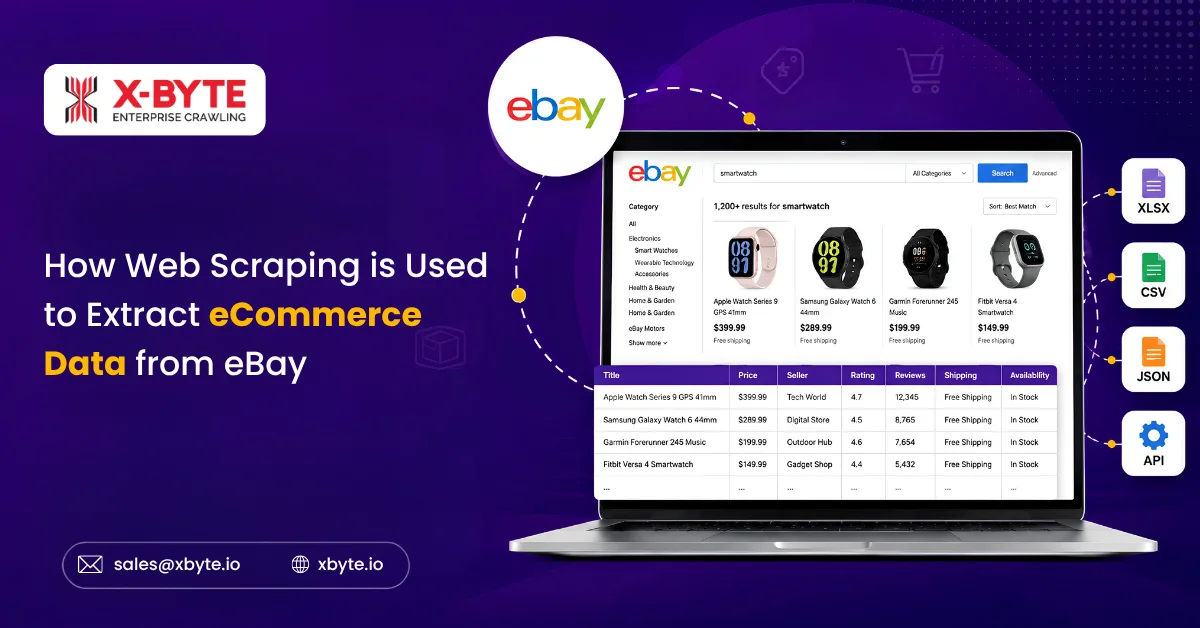
How Web Scraping Is Used to Extract eCommerce Data From eBay
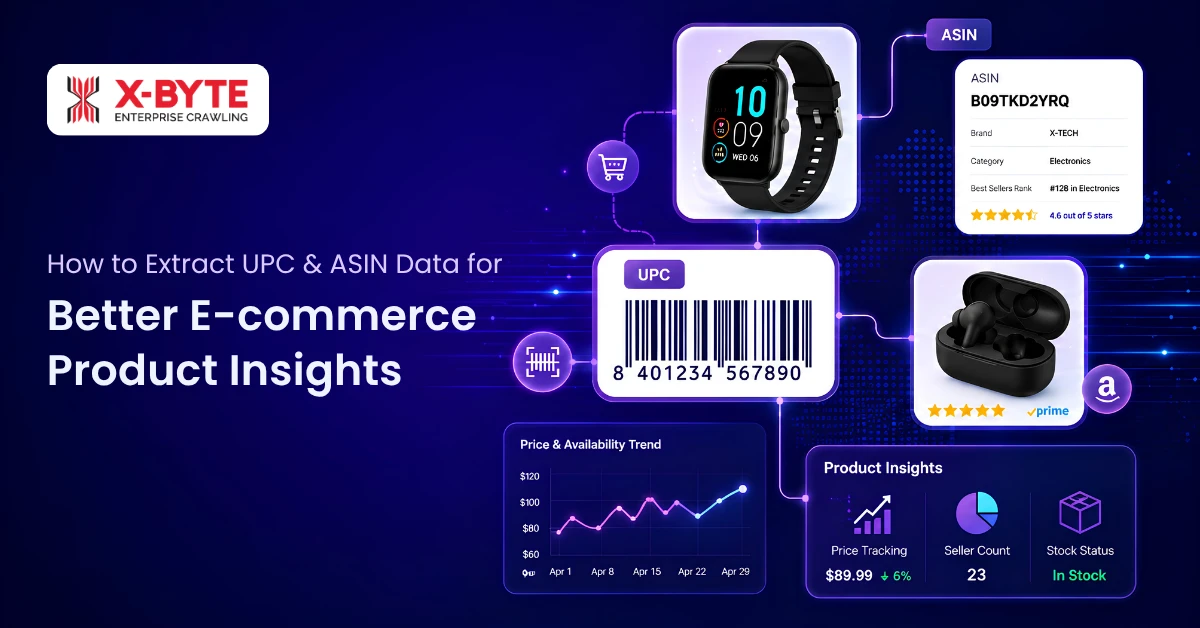
How to Extract UPC & ASIN Data for Better E-commerce Product Insights