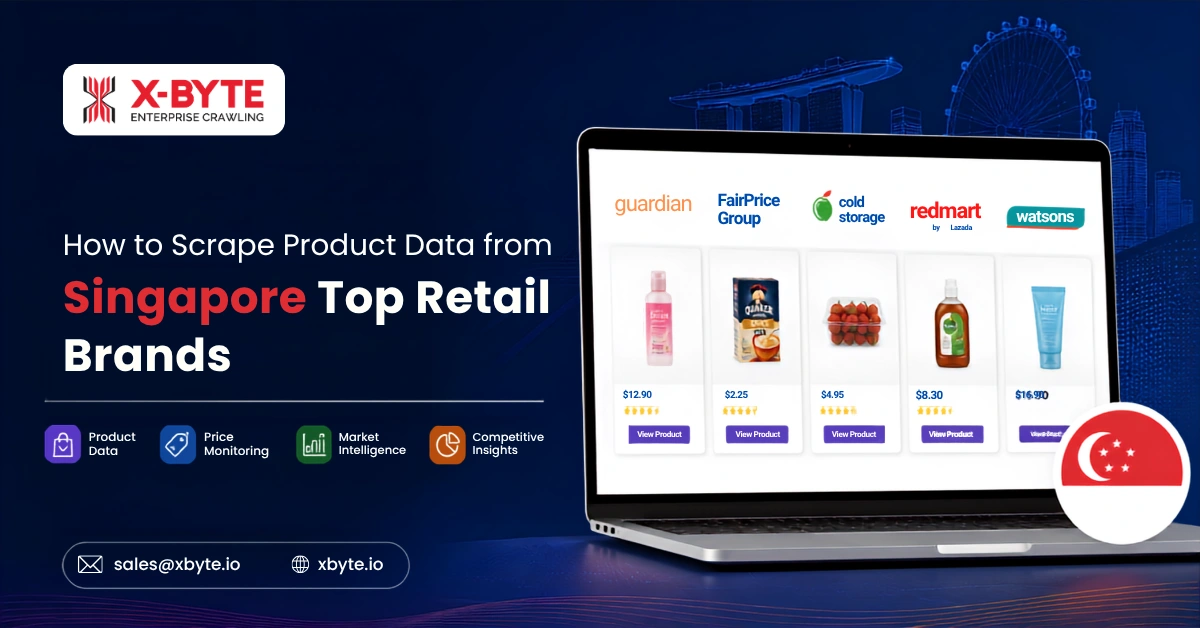



Retail moves fast. Prices shift hourly. Competitors launch flash sales without warning. Products go out of stock while customers browse your website. In this environment, retailers who react slowly lose revenue daily. This reality drives the urgent need for Real-Time Retail Data systems that deliver instant insights.
Traditional retail data systems fail modern businesses. They update weekly or monthly, creating dangerous blind spots. Meanwhile, competitors adjust prices in real time, capture market share, and win customer loyalty. The solution? A purpose-built Retail Data Stack that integrates Pricing Intelligence, Promotions Intelligence, and Availability Intelligence into one unified platform.
This comprehensive guide explains how to design a retail data stack for pricing and promotions that transforms raw market data into actionable decisions. X-Byte Enterprise Crawling has helped hundreds of retailers build these systems. Drawing from that experience, we share proven architectures and practical implementation steps.
What Is a Real-Time Retail Data Stack?
A Retail Data Stack is an integrated technology framework that collects, processes, stores, and delivers retail market data to decision-makers instantly. Unlike basic analytics tools, a complete data stack handles everything from web scraping competitor prices to presenting insights on executive dashboards.
The “real-time” element distinguishes modern stacks from legacy systems. According to McKinsey research, retailers using real-time pricing optimization see margin improvements of 2-5%. However, these gains require data freshness measured in minutes, not days.
Core Components of a Modern Retail Data Stack
Every effective Retail Intelligence Platform contains four essential layers:
- Data Collection Layer: Web scrapers, API integrations, and IoT sensors gather pricing, promotional, and inventory data from multiple sources. X-Byte Enterprise Crawling specializes in this critical foundation.
- Processing Layer: Stream processing engines clean, normalize, and enrich raw data in real time. Technologies like Apache Kafka and Spark Streaming handle high-volume data flows.
- Storage Layer: Time-series databases and data lakes store historical and current data for analysis. This layer supports both real-time queries and long-term trend analysis.
- Analytics Layer: Business intelligence tools, machine learning models, and custom dashboards transform data into actionable Retail Data Insights.
How Does Pricing Intelligence Drive Retail Revenue?
Pricing Intelligence monitors competitor prices, analyzes market trends, and recommends optimal price points automatically. This capability sits at the heart of Competitive Pricing strategies for modern retailers.
Consider this scenario: Your competitor drops the price on a popular product at 2 PM. Without real-time monitoring, you discover this change during tomorrow’s manual review. You lose an entire day of sales to customers who comparison-shop before buying. Pricing Intelligence systems detect such changes within minutes and can trigger automatic responses.
What Are the Key Benefits of Real-Time Pricing Intelligence?
Retailers implementing Competitive Pricing systems through X-Byte Enterprise Crawling consistently report these outcomes:
-
- Increased Profit Margins: Dynamic pricing adjusts prices upward when competitors raise theirs, capturing additional margin automatically.
-
- Improved Market Positioning: Real-time competitive awareness enables strategic positioning against specific competitors.
-
- Faster Response Times: Automated alerts and workflows reduce price-change response time from days to hours or minutes.
-
- Better Promotion Timing: Understanding competitor pricing patterns helps time promotions for maximum impact.
Real-World Use Case: Electronics Retailer Pricing Optimization
A mid-size electronics retailer partnered with X-Byte Enterprise Crawling (xbyte.io) to implement Pricing Intelligence across 15,000 SKUs. The system monitored eight major competitors hourly. Within three months, the retailer reported a 3.2% margin improvement and a 12% reduction in price-related customer complaints. The Pricing Strategies derived from this data now drive quarterly planning.
How Can Promotions Intelligence Maximize Campaign ROI?
Promotions Intelligence tracks competitor promotional activities, analyzes campaign effectiveness, and identifies optimal promotional windows. This intelligence proves essential for pricing and promotions intelligence for retailers in the US and global markets alike.
Retailers run thousands of promotions annually. Without systematic tracking, marketing teams cannot determine which promotions actually drive incremental revenue versus those that simply discount sales that would happen anyway. Promotions Intelligence solves this challenge through data-driven measurement.
What Data Points Does Promotions Intelligence Track?
Comprehensive Retail Analytics Solutions monitor multiple promotional dimensions:
-
- Competitor Promotional Calendars: Track when competitors run sales, what products they discount, and how deep their discounts go.
-
- Promotional Mechanics: Analyze whether competitors use percentage discounts, BOGO offers, bundle deals, or loyalty-exclusive pricing.
-
- Channel Distribution: Monitor which promotions appear online-only versus omnichannel.
-
- Customer Response Metrics: Measure traffic, conversion, and basket size changes during promotional periods.
Case Study: Fashion Retailer Promotion Optimization
A fashion retailer struggled with promotional effectiveness. Their marketing team ran similar sales each year without analyzing results. After implementing Promotions Intelligence through X-Byte Enterprise Crawling’s Retail Intelligence Platform, they discovered surprising patterns.
Their best-performing promotions occurred during competitor stock-out periods, not during traditional sale seasons. The retailer shifted 30% of their promotional calendar based on these insights, increasing promotional ROI by 18%.
Why Is Real-Time Availability Intelligence Critical for Retail Success?
Availability Intelligence monitors stock levels across your stores, competitors, and marketplaces. This capability enables real-time availability intelligence for retail teams to optimize inventory decisions and capitalize on competitor stockouts.
Out-of-stock situations cost retailers billions annually. Research from IHL Group estimates that stockouts, overstocks, and returns cost retailers $1.1 trillion globally each year. Real-time availability monitoring addresses this challenge from multiple angles.
How Does Availability Intelligence Improve Decision-Making?
Retail Data Insights from availability monitoring support several strategic capabilities:
- Competitor Stock Monitoring: When competitors run out of popular items, you can adjust bidding on paid search and increase promotion of in-stock alternatives.
- Demand Forecasting Enhancement: Real-time availability data improves demand forecasting models, reducing both stockouts and overstock situations.
- Dynamic Pricing Triggers: Low competitor availability on high-demand items can trigger automatic price increases within your defined parameters.
- Supplier Performance Tracking: Monitor which products consistently face availability issues to inform vendor negotiations.
Example: Home Improvement Retailer Inventory Optimization
A home improvement retailer implemented Availability Intelligence through X-Byte Enterprise Crawling. The system monitored competitor stock levels across 50,000 SKUs. When major competitors faced supply chain disruptions, the retailer’s system detected widespread stockouts in specific categories.
Marketing immediately launched targeted campaigns for in-stock alternatives, capturing significant market share during the disruption period.
How Do You Build and Implement a Real-Time Retail Data Stack?
Building the best retail data stack for competitive intelligence and pricing optimization requires careful planning and the right technology partners. This section outlines a proven implementation approach.
Step 1: Define Data Requirements and Sources
Start with identifying what data you need and where it exists. Most retailers require competitor pricing data, promotional information, product availability, and customer review sentiment. X-Byte Enterprise Crawling helps clients map their competitive landscape and identify the most valuable data sources for their specific market.
Step 2: Select Appropriate Technologies
Technology selection depends on data volume, update frequency, and budget. Consider these options for each stack layer:
-
- Data Collection: Enterprise web scraping services (X-Byte Enterprise Crawling), API integrations, and manual data feeds.
-
- Stream Processing: Apache Kafka, AWS Kinesis, or Google Cloud Dataflow for real-time data processing.
-
- Storage: Snowflake, Databricks, or cloud-native data warehouses for analytics-ready storage.
-
- Visualization: Power BI, Tableau, or custom dashboards integrated with your existing BI infrastructure.
Step 3: Establish Data Governance and Quality Controls
Real-Time Retail Data only delivers value when accurate. Implement validation rules that catch data anomalies before they reach decision-makers. Create clear ownership for data quality across your organization. Document data lineage so analysts understand where insights originate.
Step 4: Integrate with Existing Systems
Your Retail Data Stack must connect with existing enterprise systems. Plan integrations with your ERP, pricing engines, marketing automation platforms, and inventory management systems. These connections enable automated actions based on intelligence insights.
How Does X-Byte Enterprise Crawling Support Retail Data Stacks?
X-Byte Enterprise Crawling provides the foundation for successful Retail Analytics Solutions. Our specialized services address the most challenging aspect of retail data stacks: reliable, scalable data collection.
- Retail Data Scraping Services
Our Retail Data Scraping Services extract competitor pricing, product information, and availability data at scale. We handle anti-bot challenges, data normalization, and delivery scheduling. Clients receive clean, structured data ready for analysis.
- Competitive Price Intelligence
X-Byte’s Competitive Price Intelligence Solution delivers hourly or daily competitor price monitoring across unlimited SKUs. Our platform matches products across retailers, tracks price history, and alerts your team to significant changes. This turnkey solution accelerates time-to-value for Pricing Intelligence initiatives.
Conclusion: Transform Your Retail Strategy with Real-Time Intelligence
Building a Real-Time Retail Data Stack requires investment, but the returns justify the effort. Retailers who implement comprehensive Pricing Intelligence, Promotions Intelligence, and Availability Intelligence capabilities consistently outperform competitors who rely on legacy systems or manual processes.
The retail landscape grows more competitive each year. Winners differentiate through superior data capabilities and faster decision-making. X-Byte Enterprise Crawling partners with retailers to build these capabilities efficiently.
Contact our team today to discuss your Retail Data Stack requirements and discover how to design a retail data stack for pricing and promotions that delivers measurable business results.
Ready to transform your retail intelligence capabilities? Visit xbyte.io to schedule a consultation with our retail data experts.
Frequently Asked Questions
 ✯ Alpesh Khunt ✯

Related Blogs
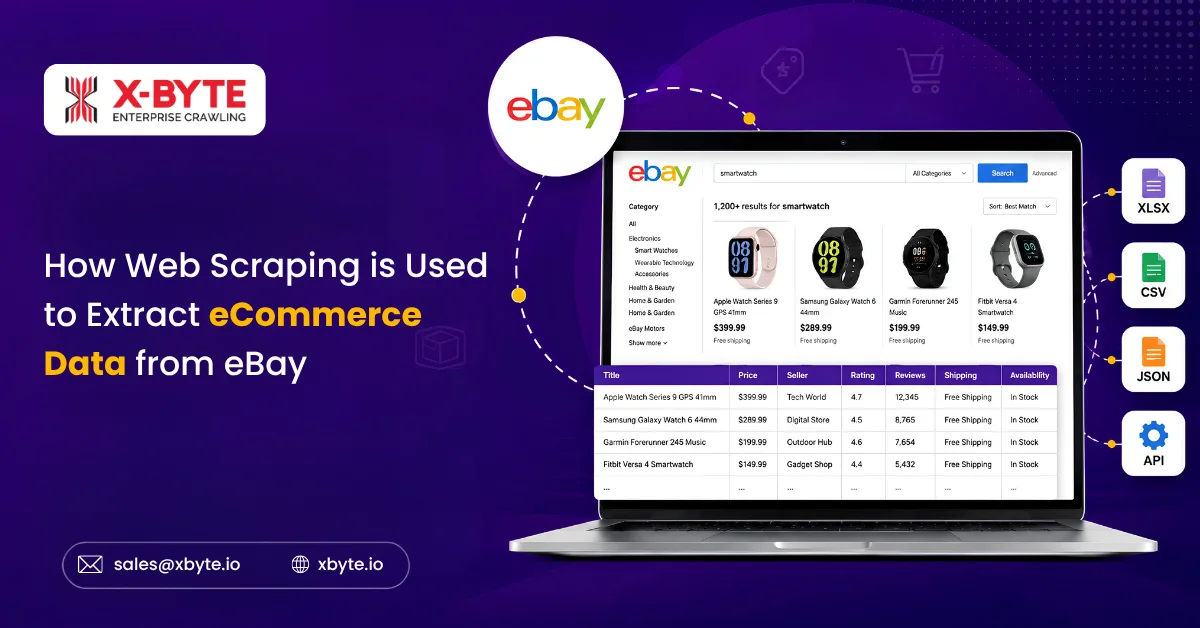
How Web Scraping Is Used to Extract eCommerce Data From eBay
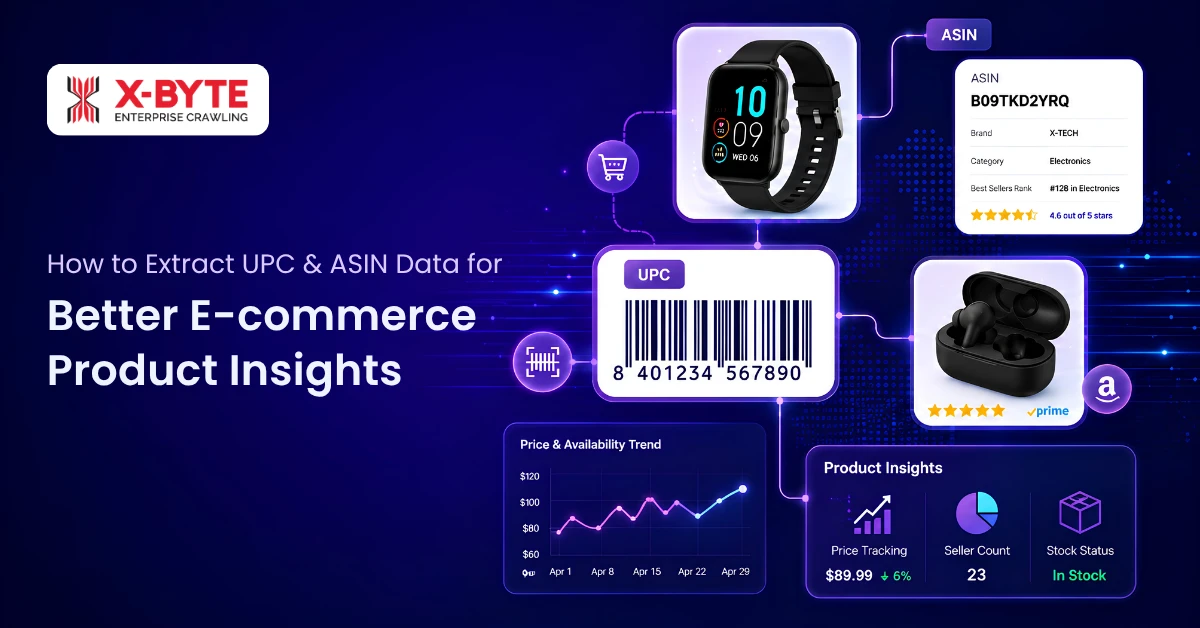
How to Extract UPC & ASIN Data for Better E-commerce Product Insights