


Introduction: Understanding the Shift in Data Engineering
Scraping scripts were never supposed to become permanent infrastructure. Most of them started as quick fixes, one-off extractions written over a weekend to pull competitor prices or aggregate product listings. But somewhere along the way, these scripts got embedded into core data pipelines, and now entire reporting workflows depend on code that nobody wants to touch.
That is the reality a lot of data engineering management teams are sitting with right now. They have dozens, sometimes hundreds, of data scraping tools and scripts scattered across repositories, each maintained by a different engineer, each failing in its own creative way. When one breaks, it quietly poisons the downstream data. When three break at once, it becomes a sprint-derailing emergency.
The shift toward managed data infrastructure is happening because data teams have done the math. The hours spent on scraping script maintenance are hours not spent on analytics, modeling, or building anything that actually moves the business forward. At some point, the tradeoff stops making sense, and teams start looking for something that works without constant supervision.
X-Byte Enterprise Crawling operates in this exact space. We work with data teams who are either already buried in script failures or who have seen enough breakdowns to know what is coming. The conversation is almost always the same: the scripts were a reasonable starting point, but retiring scraping scripts in favor of properly managed data infrastructure is now the only path that makes operational sense.
The Challenges with Traditional Scraping Scripts
Spend enough time working with custom scraping pipelines and you start to recognize the warning signs. Not just the technical ones, but the organizational ones, where a team’s velocity drops noticeably because too much engineering time gets redirected toward keeping existing scripts alive.
Maintenance Overhead: Constant Updates and Manual Troubleshooting
Websites do not stay static. Layout changes, class renames, JavaScript rendering, anti-bot enforcement, login walls that were not there last month. Every one of those changes is a potential script failure, and scraping script maintenance has no automated response to any of it. Someone has to notice the failure, diagnose it, write a fix, test it, and deploy it, often under pressure because a dashboard somewhere is already showing stale data.
Industry data puts the average at 35 to 40 percent of engineering time consumed by this kind of reactive maintenance in teams that rely heavily on custom scripts. That is not a minor overhead. For a team of four data engineers, it is effectively one person working full time just to keep existing pipelines from falling apart.
Scalability Issues: Difficulty Managing Large-Scale Data Extraction
The scripts that work at 10,000 records per day tend to fall apart somewhere around 500,000. Large-scale data extraction surfaces problems that were invisible at lower volumes: IP bans, request throttling, memory leaks, race conditions in parallel processes, unhandled edge cases in HTML structures that only appear in the long tail of pages. Solving these problems in a script environment means building infrastructure on top of infrastructure, which is a project in itself.
Teams that try to scale their data scraping automation without moving to a managed platform often end up rebuilding their architecture from scratch anyway. At that point, they have spent the same budget they would have spent on a managed solution, except they now own the ongoing maintenance burden too.
Data Quality Risks: Vulnerability to Data Inaccuracies and Downtime
Silent failures are the worst kind. A script that crashes loudly is obvious. A script that runs successfully but returns malformed data because a CSS selector now points to the wrong element, that one takes days or weeks to catch. By the time the bad data surfaces in a report, it has already influenced decisions.
Compliance adds another layer of exposure. GDPR, CCPA, and various sector-specific regulations impose real obligations around how data is collected, stored, and deleted. Manual web scraping management pipelines were not built with any of that in mind, and retrofitting compliance onto script-based infrastructure is genuinely painful. Managed platforms build those controls in from the start.
Scraping Failures and Inefficiencies at Scale: A Practical Example
Picture a data team maintaining 120 scripts across competitor pricing pages, inventory feeds, and review aggregators. Two major retailers push simultaneous site redesigns on the same Thursday. Thirty-plus scripts fail within six hours. Engineers get pulled off sprint work. A stakeholder notices the pricing dashboard has not updated in two days and escalates. Four engineers spend the next three days doing nothing but recovery work. The planned feature releases slip. That is not an unusual scenario, it is a Tuesday for teams that have scaled past the point where scripts are viable.
The operational difference between script-based pipelines and managed infrastructure is significant across every dimension that matters to a data team:
| Factor | Traditional Scraping Scripts | Managed Data Infrastructure |
| Maintenance | Manual fixes required after every site change | Automated monitoring detects and handles structural changes |
| Scalability | Breaks down at high volumes without rearchitecting | Scales horizontally to millions of records on demand |
| Data Accuracy | Silent errors corrupt downstream data | Validation at collection layer stops bad data before it enters the pipeline |
| Compliance | Custom development required per regulation | Compliance controls built into the platform |
| Cost Over Time | Grows with volume, team size, and failure frequency | Predictable pricing that improves at scale |
| Time to Insight | Delayed by failures, recovery cycles, and manual QA | Real-time delivery with automated quality checks |
Why Managed Data Infrastructure is the Future?
The appeal of managed data infrastructure is not just about offloading work. It is about changing the operating model entirely. Instead of writing code that extracts specific fields from specific pages and then babysitting that code indefinitely, teams configure what they need and let the platform handle how it gets done.
End-to-End Data Management: From Collection to Storage in One Unified Solution
Most data engineering teams that rely on custom scripts are also managing a patchwork of supporting tools: a scheduler here, a deduplication job there, a separate storage layer, a monitoring script that checks whether the main script ran. Data infrastructure for engineers that is properly managed collapses all of that into one system. Collection, parsing, validation, transformation, storage, and delivery all run through a single orchestrated environment with centralized visibility.
That consolidation alone eliminates entire categories of failure. Fewer handoffs between tools means fewer places for things to go wrong, and when something does go wrong, there is one place to look instead of five.
Scalability: Effortlessly Handle Millions of Data Points
Enterprise-grade scalable data scraping solutions do not require manual provisioning when extraction volumes grow. The infrastructure scales dynamically, distributing load across nodes, rotating IPs intelligently, and scheduling requests in a way that respects rate limits without manual tuning. A team using X-Byte Enterprise Crawling can move from 50,000 daily records to 50 million without writing a single line of new infrastructure code.
Data Accuracy and Compliance: Reduced Risk of Errors and Compliance Issues
Validation at the collection layer changes the economics of data quality work. When records that do not meet predefined quality thresholds get flagged or rejected before entering the pipeline, the downstream cleaning burden drops dramatically. Analysts spend less time questioning data provenance and more time doing actual analysis.
Compliance configuration is handled at the platform level as well. Data residency rules, retention windows, access controls, and audit logs are configured once and applied consistently across all extraction jobs, without requiring custom development every time a new regulatory requirement appears.
Case Study: How X-Byte’s Infrastructure Transformed Data Collection for an E-Commerce Client
An e-commerce intelligence company running data scraping tools across 200 plus scripts approached X-Byte with a failure rate above 18 percent per month. Their three engineering teams were spending more time patching crawlers than building the analytical products their clients paid for.
After migrating to X-Byte’s managed data infrastructure, the failure rate fell to under 1.2 percent within 60 days. Time to insight improved by 60 percent. Engineers recovered 35 hours per week that had been absorbed by maintenance and redirected it toward product development. The business case paid for itself inside one quarter.
Key Benefits of Transitioning to Managed Data Infrastructure
Teams that have completed the move from scripts to managed data infrastructure report consistent gains across the following areas:
- Reduced Complexity: Engineering teams stop writing and maintaining extraction code. They define the data they need; the platform handles collection, validation, and delivery.
- Higher Reliability: Automated monitoring and self-healing pipelines reduce failure rates by an order of magnitude compared to manually maintained scripts.
- Cost Efficiency: Removing the need for dedicated infrastructure maintenance roles and reducing unplanned engineering labor produces real savings, particularly at scale.
- Faster Time to Insight: Real-time pipelines eliminate the latency from nightly batch jobs and the multi-day gaps caused by undetected script failures.
- Compliance Ready: Platform-level governance controls reduce legal exposure for teams in regulated industries without requiring custom compliance development.
How to Make the Transition: Steps to Retire Scraping Scripts?
Migrating from scraping scripts to managed infrastructure does not have to be a big-bang cutover. Phased migrations are lower risk and allow teams to validate performance at each stage before fully committing. Here is a sequence that works:
- Assess Your Current Infrastructure: Start with a full audit of every scraping script in production. Document the data source, extraction frequency, downstream dependencies, and failure history for each one. This inventory surfaces which pipelines are the most critical and which are causing the most pain, giving you a clear migration priority order.
- Identify Suitable Managed Solutions: Evaluate platforms against your specific extraction requirements: data source types, volume, delivery format, compliance needs, and monitoring expectations. X-Byte Enterprise Crawling covers all of these within a unified platform built specifically for enterprise-grade web scraping management and data engineering teams with serious scale requirements.
- Plan for Integration: Confirm that your downstream systems can consume data in the formats the managed platform delivers. BI tools, data warehouses, and machine learning pipelines all have specific input requirements. Mapping these before migration prevents surprises after the switchover.
- Continuous Optimization: After migration, use platform analytics to refine extraction schedules, adjust quality filters, and respond to source site changes. This ongoing tuning takes a fraction of the time that equivalent changes would require across a fleet of individual scripts.
Real-World Example: How X-Byte Helped a Data Team?
A retail analytics firm operating across North America and Europe was running 150 plus data scraping tools and custom scripts against competitor pricing pages, inventory feeds, and promotional calendars. Anti-bot systems and regular site redesigns caused failures weekly. The engineering team was spending the bulk of every sprint on recovery rather than roadmap work.
They brought in X-Byte Enterprise Crawling to assess the situation and manage the migration to a fully managed data infrastructure. The transition ran in phases over ten weeks. No live data feeds were disrupted during migration.
Post-migration performance, measured against the same metrics tracked before the switch:
| Metric | Before X-Byte | After X-Byte |
| Monthly Data Failure Rate | 22% | 0.8% |
| Engineer Hours on Maintenance | 45 hrs per week | 4 hrs per week |
| Time to Insight | 48 to 72 hours | Under 2 hours |
| Data Sources Covered | 150 manually managed | 400 or more automated |
| Compliance Incidents | 3 per quarter | 0 per quarter |
Manual QA reviews dropped by over 80 percent. Engineering capacity recovered from maintenance was redirected into competitive analysis tooling and client-facing product features. The numbers above are why data teams prefer managed data infrastructure over scraping scripts, not in theory, but in practice, measured against real operations.
Conclusion: Future-Proofing Your Data Infrastructure
Custom data scraping tools and scripts had their moment. For teams working at modest scale with stable data sources, they were a reasonable approach. That window has narrowed considerably. Websites are harder to scrape than they were three years ago. Data volumes that seemed large in 2021 are routine now. Compliance requirements that were optional considerations are legal obligations in most industries.
Continuing to invest in script-based web scraping management under these conditions is a losing position. The maintenance cost grows faster than the team’s capacity to absorb it. Data quality problems accumulate. Engineers who should be building spend their time fixing. At some point, the decision to move to managed data infrastructure stops being a question of whether and becomes a question of when.
X-Byte Enterprise Crawling provides end to end scalable data scraping solutions for teams that are ready to make that move. Our platform covers the full data lifecycle from extraction and validation through to delivery, and it is built for the scale and compliance demands that modern data engineering management actually faces.
Learn how X-Byte can help you retire your scraping scripts and replace them with infrastructure that works reliably at scale. Get in touch with our team for a direct assessment of your current pipeline.
 ✯ Alpesh Khunt ✯

Related Blogs
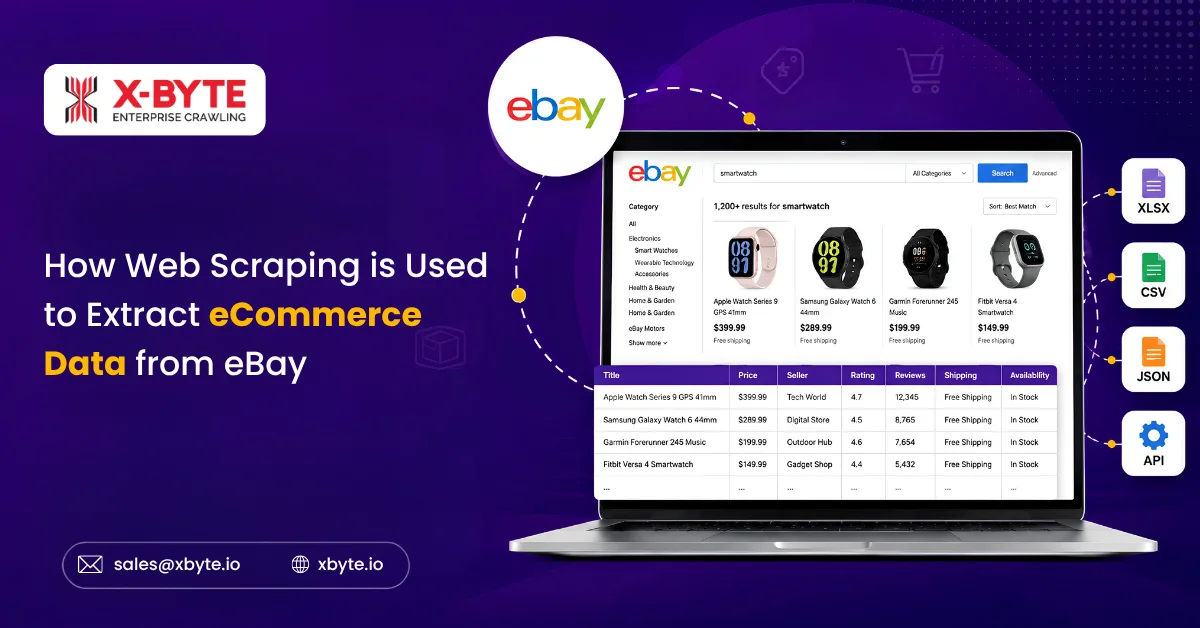
How Web Scraping Is Used to Extract eCommerce Data From eBay
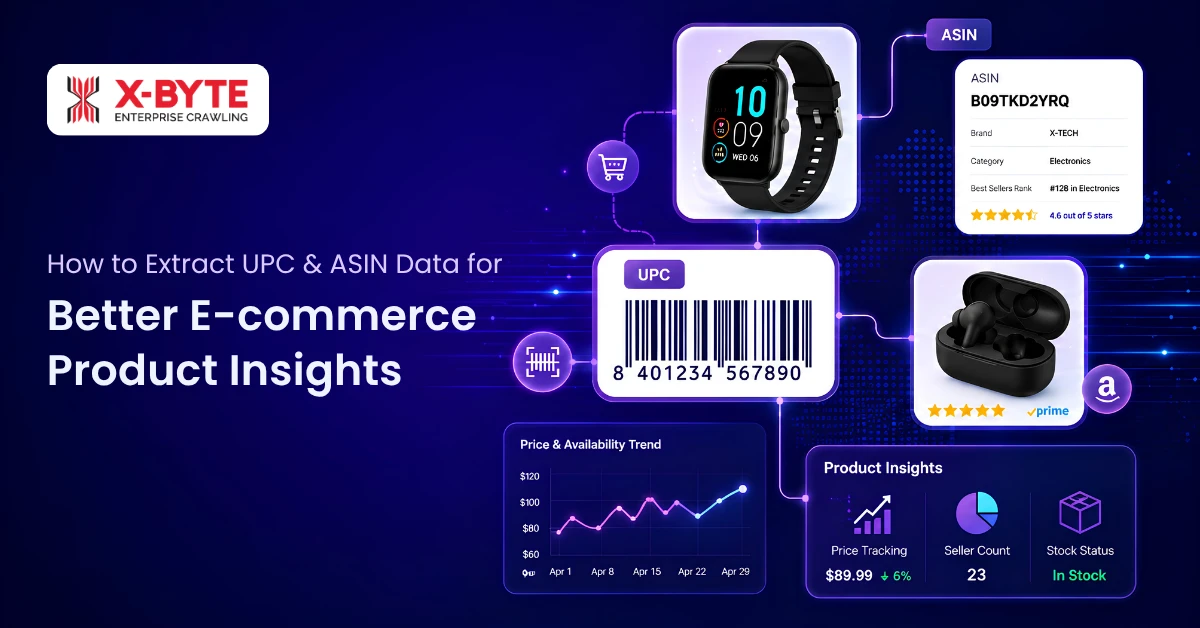
How to Extract UPC & ASIN Data for Better E-commerce Product Insights