
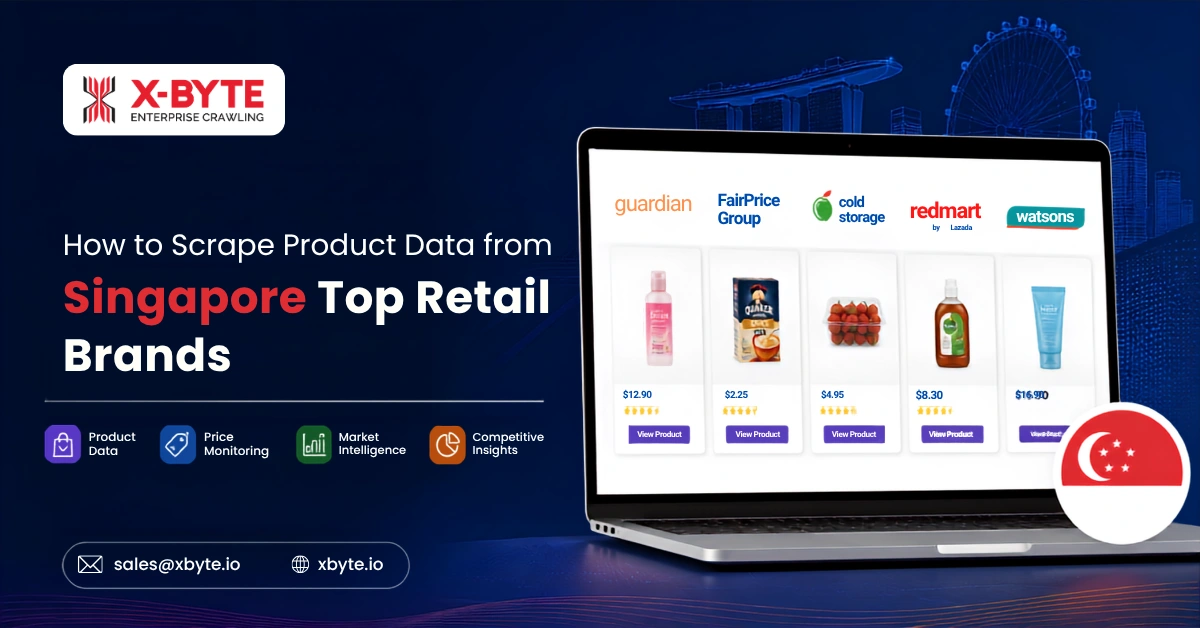
Singapore’s retail market is highly competitive, with global and local brands continuously changing product prices, promotions, availability, and customer offerings. Businesses use retail product data scraping to collect structured insights from Singapore retail websites and analyze market trends.
From fashion retailers like Uniqlo and Charles & Keith to supermarket chains like NTUC FairPrice, Singapore retail platforms contain valuable product information that can help businesses understand pricing strategies, product demand, and competitor positioning.
What Is Singapore Retail Product Data Scraping?
Singapore retail product data scraping is the automated process of extracting product information from online retail websites and converting it into structured datasets.
Instead of manually checking thousands of product pages, businesses can collect information such as:
- Product names
- Product categories
- Prices
- Discount offers
- Product availability
- Customer ratings
- Reviews
- Product descriptions
- Images
- Brand information
This data helps retailers, eCommerce companies, and market researchers make data-driven decisions.
Why Scrape Product Data From Singapore Retail Brands?
Singapore has a diverse retail ecosystem covering fashion, grocery, electronics, beauty, and lifestyle categories.
Businesses can analyze product data from different retail segments, including:
Fashion Retail Data
Fashion brands such as Uniqlo and Charles & Keith frequently update product collections, pricing, seasonal promotions, and inventory availability.
Scraping fashion retail data helps businesses:
- Track new product launches
- Monitor competitor pricing
- Analyze seasonal trends
- Compare product collections
Grocery and Supermarket Data
Retailers such as NTUC FairPrice provide large product catalogs across grocery, household, and daily essentials categories.
Grocery product data scraping helps companies analyze:
- Product pricing changes
- Promotional campaigns
- Brand availability
- Consumer purchasing trends
Electronics and Marketplace Data
Singapore’s electronics and online retail sector changes rapidly due to new launches, discounts, and competitive pricing.
Businesses can monitor:
- Product specifications
- Seller pricing
- Availability
- Customer reviews
- Market demand
What Product Data Can Be Scraped From Singapore Retail Websites?
A retail data scraping solution can extract:
Product Information
- Product title
- Brand name
- Category
- Product description
- Specifications
Pricing Intelligence
- Current price
- Original price
- Discounts
- Promotional offers
Customer Insights
- Ratings
- Reviews
- Customer feedback
Availability Data
- Stock status
- Delivery information
- Store availability
How Businesses Use Singapore Retail Data Scraping?
1. Competitor Price Monitoring
Retailers can compare pricing changes across brands and adjust their strategies based on market conditions.
2. Product Trend Analysis
Businesses can identify growing categories, popular products, and changing customer preferences.
3. Market Expansion Research
Companies entering Singapore markets can analyze existing product categories, competition levels, and consumer demand.
4. Brand Intelligence
Brands can monitor competitors’ product launches, promotions, and positioning strategies.
Benefits of AI-Powered Singapore Retail Data Scraping
Modern AI-powered scraping solutions help businesses collect retail information at scale by:
- Automating product data extraction
- Handling large product catalogs
- Monitoring frequent website updates
- Structuring complex retail information
- Providing regular data feeds
This allows businesses to focus on analysis rather than manual data collection.
Final Word
Singapore retail brands generate valuable product intelligence through pricing updates, promotions, product launches, and customer interactions.
By scraping product data from Singapore retail websites, businesses can gain deeper insights into competitor strategies, market trends, and consumer demand.
Whether analyzing fashion retailers like Uniqlo and Charles & Keith, grocery platforms like NTUC FairPrice, or other Singapore-based retail sources, structured retail data helps businesses make faster and more informed decisions.
 ✯ Alpesh Khunt ✯

Related Blogs
E-Commerce Product Data Management: Best Practices for Retailers
Why Shopee Data Extraction Is the Secret Weapon for Modern Singaporean Retailers