

Introduction: Why Enterprise Web Scraping Matters in 2026?
Businesses today operate in a data-driven economy where real-time insights define competitive advantage. Enterprise web scraping services have become essential for organizations seeking to extract actionable intelligence from the vast digital landscape. From market analysis to competitor tracking, automated data extraction transforms how companies make strategic decisions.
According to recent industry reports, the global web scraping services market is projected to reach $8.9 billion by 2027. This growth reflects increasing demand for structured data across industries including retail, finance, healthcare, and technology. Therefore, understanding pricing structures, calculating return on investment, and selecting the right vendor has never been more critical for enterprise decision-makers.
This comprehensive guide examines web scraping pricing models, demonstrates how to measure ROI of web scraping, and provides a framework for web scraping vendor selection. Whether you lead data operations, technology strategy, or marketing initiatives, this resource delivers expert insights to support informed purchasing decisions.
Section 1: Understanding Web Scraping for Enterprises
What Is Enterprise Web Scraping?
Enterprise web scraping is the automated process of extracting large volumes of structured data from websites for business intelligence purposes. Unlike basic scraping tools, enterprise data solutions handle millions of data points daily while maintaining compliance with legal frameworks and website policies.
Modern web data extraction tools utilize advanced technologies including machine learning, rotating proxies, and CAPTCHA solving to overcome anti-scraping measures. These solutions deliver clean, structured datasets ready for analysis, eliminating manual data collection that would otherwise require significant human resources.
Why Do Enterprises Need Web Scraping?
Large organizations face constant pressure to monitor markets, track competitors, and identify emerging opportunities. Automated data scraping addresses these challenges by providing systematic access to publicly available information that would be impossible to gather manually at scale.
Key use cases for enterprise web scraping include:
- Competitive Intelligence: Track competitor pricing, product launches, and marketing strategies across thousands of websites simultaneously.
- Market Research: Gather consumer sentiment, product reviews, and social media mentions to inform product development and positioning.
- Lead Generation: Extract business contact information from directories, professional networks, and industry databases.
- Price Monitoring: Monitor e-commerce platforms to maintain competitive pricing and identify market trends.
- Risk Management: Scan news sources and regulatory databases for compliance monitoring and brand reputation tracking.
What Are the Key Benefits of Web Scraping in 2026?
The evolution of web scraping solutions has introduced capabilities that deliver substantial competitive advantages. Modern platforms offer real-time data streams, enabling businesses to respond to market changes within hours rather than weeks.
| Benefits | Business Impact |
| Data Scalability | Process millions of records daily without increasing headcount or infrastructure costs. |
| Automation Efficiency | Reduce manual data collection by up to 95%, freeing analysts for strategic work. |
| Real-Time Insights | Access current market data for faster decision-making and competitive response. |
| Accuracy Improvement | Eliminate human error in data entry with automated validation and formatting. |
| Cost Reduction | Lower data acquisition costs by 60-80% compared to manual methods or third-party data purchases. |
What Factors Influence Web Scraping Pricing?
Pricing for web scraping services varies significantly based on project complexity and operational requirements. Understanding these factors helps organizations budget accurately and negotiate effectively with vendors.
Primary pricing factors include:
- Data Volume: The number of pages, records, or API calls required monthly directly impacts costs. Higher volumes typically receive discounted per-unit pricing.
- Target Website Complexity: Sites with sophisticated anti-bot measures, JavaScript rendering, or login requirements demand advanced infrastructure and expertise.
- Data Freshness Requirements: Real-time or hourly data updates cost more than daily or weekly extractions due to increased computational resources.
- Customization Level: Pre-built connectors cost less than custom scraping solutions tailored to specific data structures or business workflows.
- Support and SLA Requirements: Enterprise-grade service level agreements with dedicated support add premium costs but ensure reliability.
What Are the Pricing Tiers for Enterprise Web Scraping in 2026?
Most vendors structure enterprise web scraping services into tiered packages designed for different organizational scales. The following table outlines typical pricing ranges observed across leading providers in 2026.
| Tier | Monthly Cost | Data Volume | Best Fit for |
| Basic | $500 – $2,000 | Up to 100K records | Small businesses, testing |
| Professional | $2,000 – $10,000 | 100K – 1M records | Mid-market companies |
| Enterprise | $10,000 – $50,000+ | 1M – 100M+ records | Large enterprises, agencies |
| Custom | Custom quote | Unlimited or specialized | Complex requirements |
Additionally, many providers offer consumption-based pricing where you pay only for data extracted. This model benefits organizations with variable data needs or seasonal demand patterns. However, predictable subscription pricing often provides better value for consistent high-volume operations.
How Does Cost Compare to Value in Web Scraping?
Evaluating cost-effective web scraping for large-scale enterprises requires looking beyond subscription fees to consider total cost of ownership. Organizations must account for implementation time, maintenance overhead, and opportunity costs of delayed data access.
For instance, building an in-house scraping solution may appear cheaper initially. However, maintaining proxy infrastructure, updating parsers for website changes, and handling legal compliance typically costs 3-5 times more than managed services over a three-year period. Consequently, most enterprises achieve better returns by partnering with specialized web scraping API providers.
How Does Web Scraping Maximize ROI for Enterprises?
The ROI of enterprise web scraping in 2026 depends on how effectively organizations leverage extracted data for revenue generation or cost reduction. Industry benchmarks suggest well-implemented scraping programs deliver returns between 300% and 800% within the first year.
Real-world ROI examples by industry:
- E-commerce: A Fortune 500 retailer increased margins by 4.2% through dynamic pricing powered by competitor monitoring, generating $23 million in additional annual profit.
- Financial Services: A hedge fund improved alpha generation by 18% using alternative data scraped from social media and news sources for sentiment analysis.
- Real Estate: A commercial property firm reduced market research costs by 72% while increasing coverage from 50 to 500 markets through automated listing aggregation.
- Travel Industry: An online travel agency improved booking conversions by 28% through real-time rate parity monitoring across 200+ hotel booking sites.
What Metrics Should You Track for Web Scraping Success?
Measuring ROI of web scraping requires tracking both operational efficiency and business outcome metrics. The following key performance indicators help quantify scraping program value.
| Metric Category | Particular KPI | Target Benchmark |
| Efficiency | Data collection time reduction | 80-95% faster than manual |
| Lead Generation | Qualified leads per month | 50-200% increase |
| Cost Savings | Data acquisition cost reduction | 60-80% savings |
| Processing Speed | Time to actionable insights | Hours vs. days/weeks |
| Data Quality | Accuracy and completeness rate | >95% accuracy |
Moreover, tracking downstream impacts such as pricing decision improvements, market share gains, and customer acquisition costs provides comprehensive ROI visibility. Organizations should establish baseline measurements before implementation to accurately calculate returns.
What Are the Key Criteria for Selecting a Web Scraping Vendor?
Web scraping vendor selection requires systematic evaluation across multiple dimensions. The right partner balances technical capabilities, compliance expertise, and customer support to deliver reliable long-term value.
Essential evaluation criteria include:
- Scalability: Can the platform handle your projected data volumes as requirements grow? Look for vendors who demonstrate experience with enterprise-scale deployments processing billions of records monthly.
- Customization Flexibility: Does the vendor offer tailored solutions for your specific data structures and workflow integrations? Pre-built connectors save time, but custom development capability matters for unique requirements.
- Data Security: What security certifications and compliance standards does the vendor maintain? Look for SOC 2 Type II certification, GDPR compliance, and enterprise-grade encryption protocols.
- Technical Support: What response times and support channels are guaranteed? Enterprise clients should expect dedicated account managers and 24/7 technical support availability.
- Infrastructure Reliability: What uptime guarantees and redundancy measures protect against data delivery disruptions? Target vendors offering 99.9% or higher availability SLAs.
How Should You Evaluate Web Scraping Solutions for Enterprises?
Effective vendor comparison for enterprise web scraping solutions follows a structured approach combining technical assessment, reference validation, and pilot testing.
Step 1: Define Requirements Document
Before engaging vendors, document your specific data sources, volume projections, delivery formats, and integration requirements. This clarity enables accurate vendor proposals and reduces implementation surprises.
Step 2: Request Technical Demonstrations
Evaluate each vendor’s ability to scrape your actual target websites during live demonstrations. Pay attention to data quality, extraction speed, and handling of edge cases like pagination or dynamic content.
Step 3: Conduct Pilot Programs
Run two to four week pilot projects with finalist vendors using real production scenarios. Measure actual delivery performance against promised specifications and evaluate working relationships with technical teams.
Step 4: Verify References and Case Studies
Contact existing enterprise customers to validate vendor claims about reliability, support responsiveness, and long-term partnership quality. Request references from similar industries or use cases where possible.
Why Choose X-Byte for Enterprise Web Scraping?
X-Byte Enterprise Solutions delivers comprehensive enterprise web scraping services designed for organizations demanding scalable, secure, and cost-effective data extraction capabilities.
X-Byte differentiators include:
- Proven Enterprise Scale: Processing over 2 billion data points monthly for Fortune 1000 clients across retail, finance, healthcare, and technology sectors.
- Custom Web Scraping Solutions: Tailored data pipelines matching your exact specifications, from source selection through delivery format and integration protocols.
- Compliance-First Approach: SOC 2 Type II certified infrastructure with built-in GDPR, CCPA, and robots.txt compliance ensuring ethical data collection.
- Dedicated Support Teams: Named account managers and 24/7 technical support with guaranteed response times under 15 minutes for critical issues.
- Flexible Pricing Models: Consumption-based and subscription options designed to optimize value across varying data volume requirements.
Conclusion: Final Thoughts on Web Scraping Services for 2026
Enterprise web scraping services represent a strategic investment for organizations seeking competitive advantage through data-driven intelligence. Understanding pricing models for enterprise web scraping services, measuring ROI of web scraping, and applying rigorous vendor selection criteria ensures maximum returns from your data extraction initiatives.
As markets grow increasingly data-intensive, the gap between data-enabled organizations and their competitors will widen. Those investing in scalable, compliant web scraping solutions today position themselves for sustained competitive advantage through 2026 and beyond.
X-Byte Enterprise Solutions stands ready to partner with your organization on this journey. Our experienced team delivers proven enterprise data solutions that transform web data into actionable business intelligence. Contact us today to explore how web scraping for business can accelerate your strategic objectives.
Frequently Asked Questions
 ✯ Alpesh Khunt ✯

Related Blogs
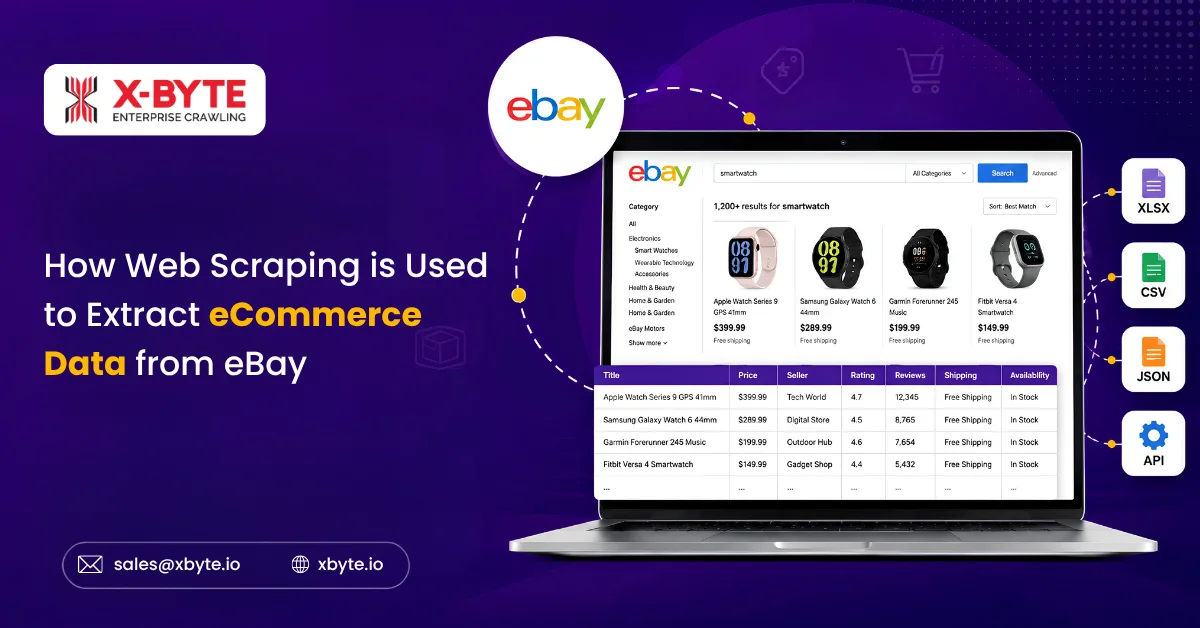
How Web Scraping Is Used to Extract eCommerce Data From eBay
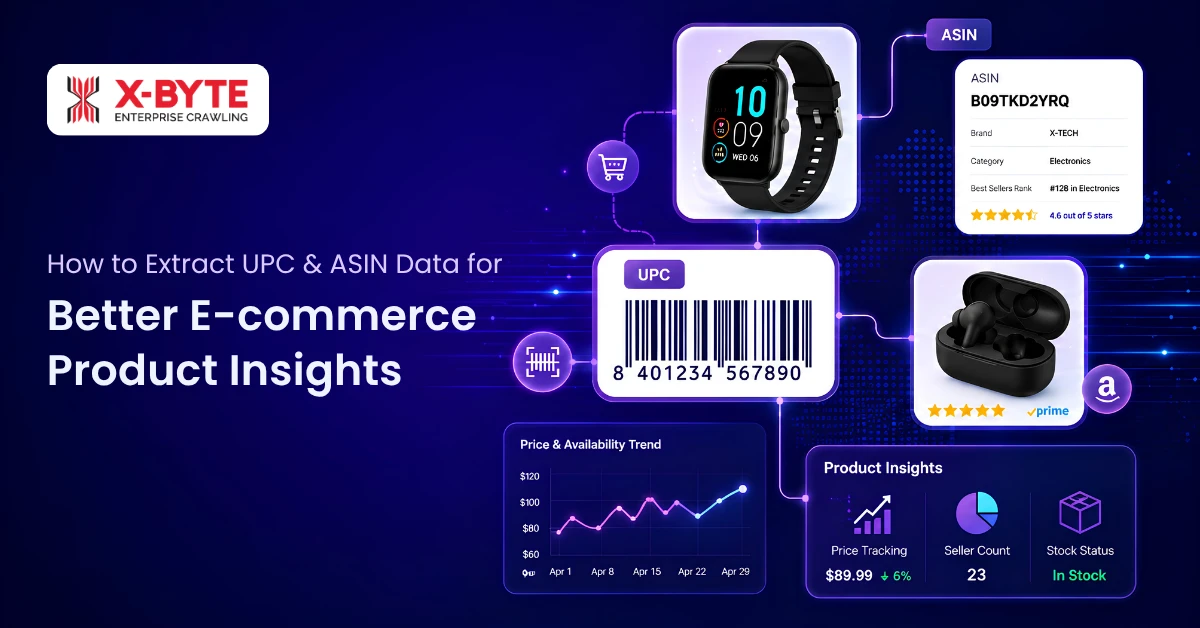
How to Extract UPC & ASIN Data for Better E-commerce Product Insights